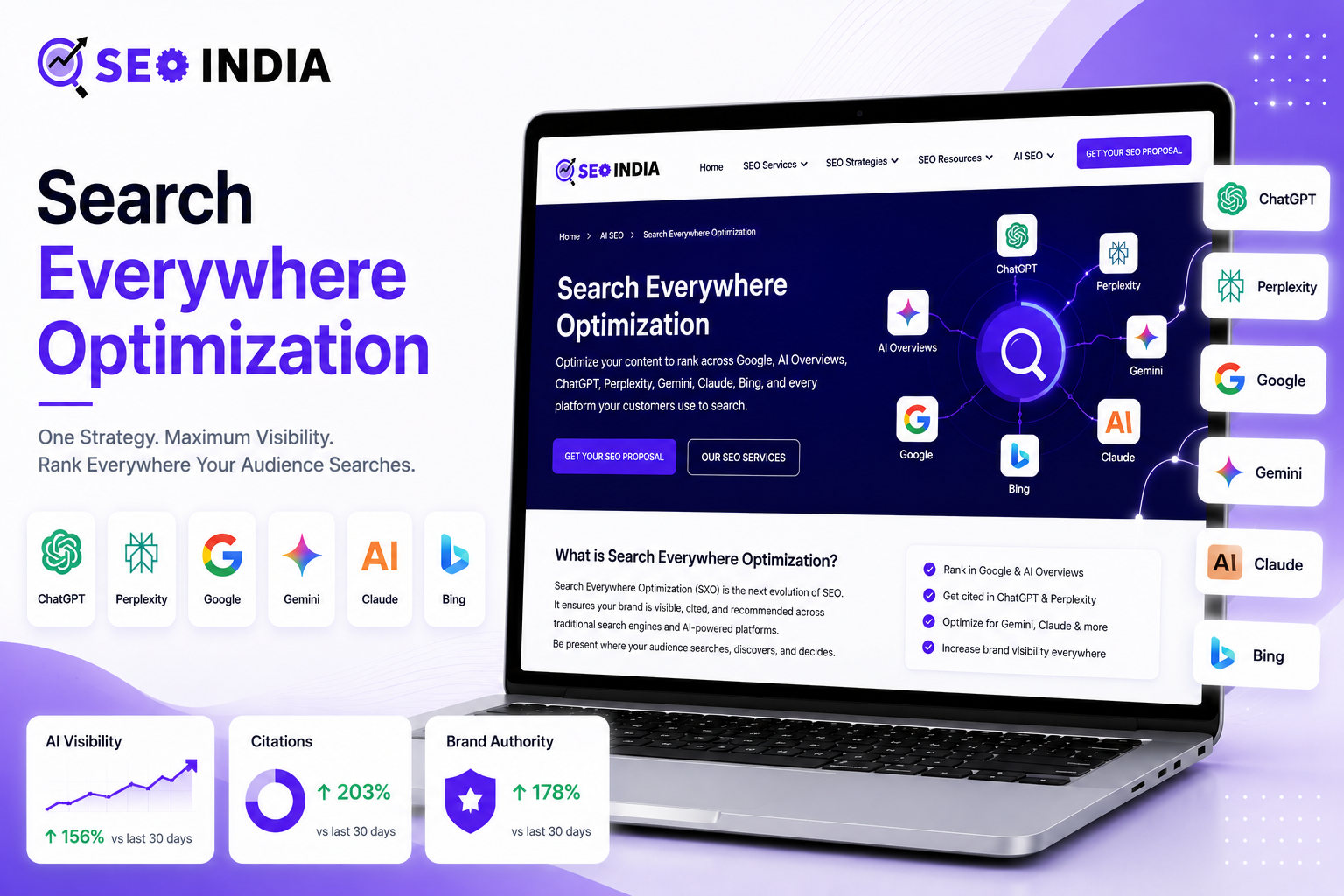
Home AI SEO The Future of SEO in 2026

Meet SEO's New Era: Search Everywhere Optimization

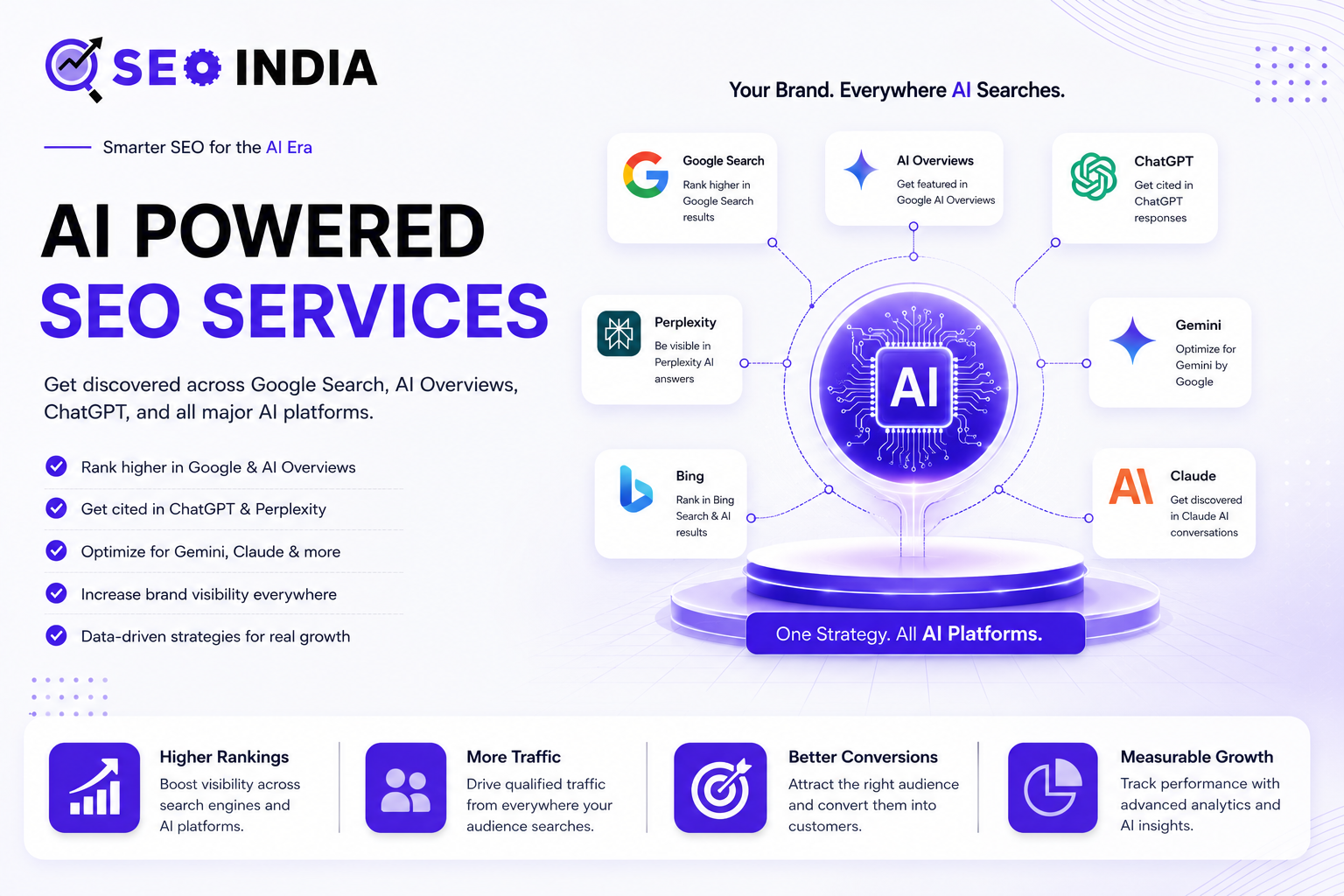
Searching is no longer limited to Google’s search bar. Searching now takes place in ChatGPT, Instagram, Perplexity, Google Business Profile, and more. Search everywhere optimization is the strategy built for this new era of searching.

Key takeaways:

  • What is search everywhere optimization? Search everywhere optimization expands the optimization of brand visibility on traditional search engines to generative AI platforms such as ChatGPT and Perplexity and Meta AI. This includes the optimization of brand visibility to help build awareness, increase website traffic, and, ultimately, increase conversions.
  • Is traditional SEO dead? Traditional SEO is not dead. Traditional SEO is the foundation of search everywhere optimization. Websites that implement strong core SEO are more likely to be surfaced in every search experience. Marketers will have to adjust the way they explain the importance of traditional SEO to clients as website traffic shifts toward AI platforms.
  • What are the biggest challenges? Search everywhere optimization requires a change in strategy, which is difficult due to limited reporting tools, time, talent, and financial resources. Securing leadership buy-in also presents a challenge.
  • What does it cost? Search everywhere optimization is more expensive than traditional SEO. Traditional SEO in India costs ₹1,25,000-₹4,00,000 a month, while search everywhere optimization costs several thousand dollars a month. Pricing differs based on the provider, so check for clear deliverables.
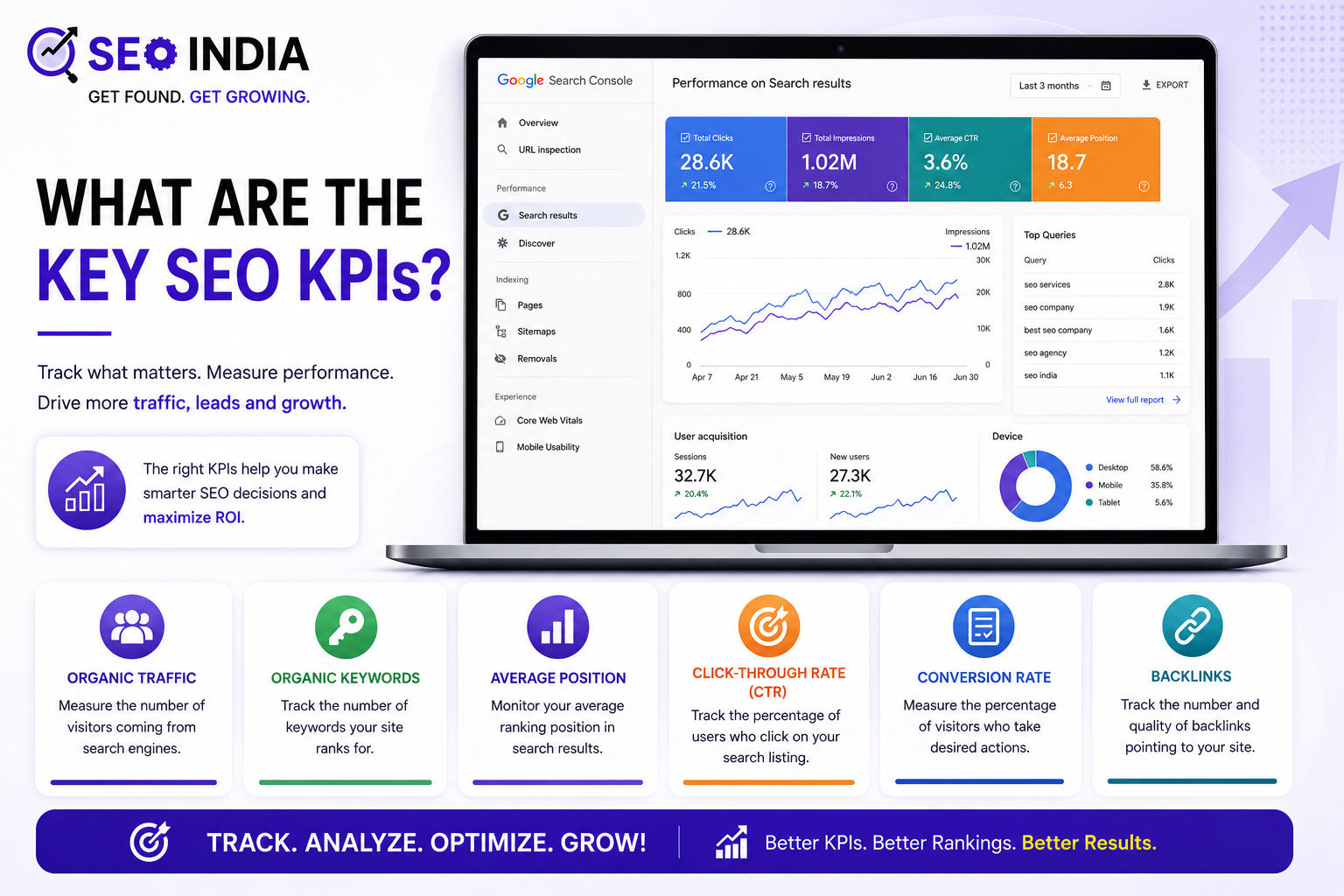
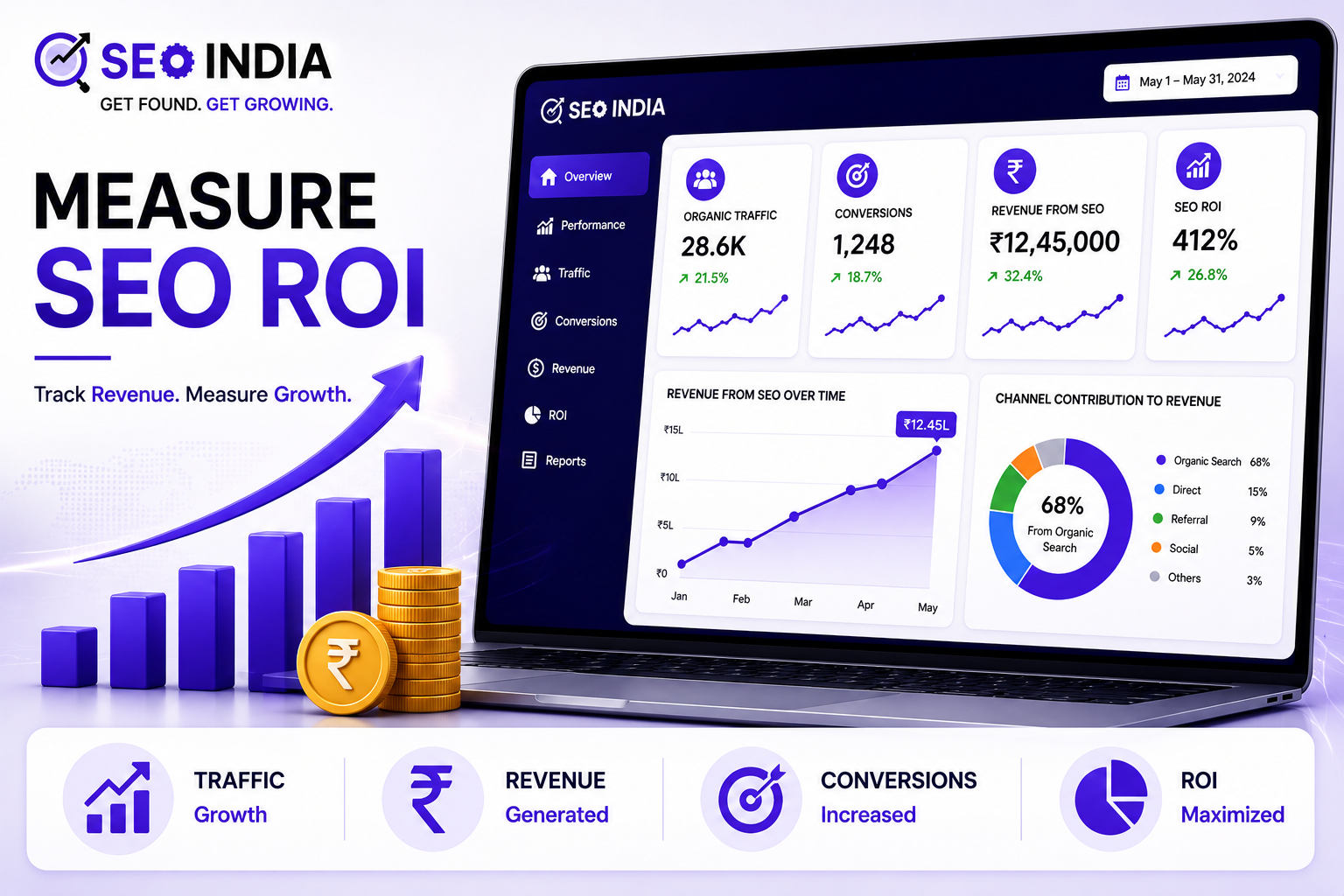
  • How is success measured? Success is measured by citations, mentions, where a brand is placed in a response, referral traffic in GA4, and conversions.

What is search everywhere optimization?

Search everywhere optimization is improving a company’s presence on all search platforms – traditional or generative – to help customers discover the company, increase the chance of visits, and promote activities that lead to sales.

Is search everywhere optimization a fad?

It’s a reasonable question. Voice search optimization was said to be the “next big thing” for many years and it never took off. But the data we have on search everywhere optimization shows something different.
  • Many internet users conduct searches using generative AI.
  • ChatGPT has hundreds of millions of users in a week.
  • Meta AI has several hundred million monthly users.
  • Perplexity AI now gets tens of millions of monthly visits.
  • Google and other search engines have seen a decrease in search traffic.
  • ChatGPT is one of the most popular websites.
Search optimization has changed. Companies will need to search for more platforms to to keep discoverable, like social platforms, search engines, and review platforms.

Which search experiences include search everywhere optimization?

Experience Examples
🔍
Search Engines
Google, Bing, DuckDuckGo
🤖
Generative Engines
ChatGPT, Perplexity AI, Microsoft Copilot
🌐
Social Networks
Facebook, YouTube, LinkedIn
📰
Media Networks
Regional news outlets, Industry publications
📍
Local Listings
Google Business Profile, Bing Places, Apple Maps
🎙️
Voice Assistants
Siri, Alexa, Bixby

What is the difference between search everywhere optimization and search engine optimization?

Area Search Everywhere Optimization Search Engine Optimization
Search Experiences 30+ Channels
30+ experiences across social platforms, generative AI, search engines, voice assistants, local listings, media publications, and more.
Traditional
Primarily focuses on traditional search engines, especially Google and Bing.
Metrics Mentions, citations, brand placements, referral traffic, engagement, visibility, and conversions. Rankings, organic traffic, click-through rate (CTR), leads, and conversions.
Targeting Conversational questions, natural language prompts, AI-generated answers, and user intent. Short-tail keywords, long-tail keywords, search intent, and keyword rankings.

There’s significant overlap in the tactics used for both approaches. They focus on creating valuable content that is unique and authoritative in order to earn shares and citations.

Is SEO dead?

SEO remains an essential component for search everywhere optimization, as the sites implementing strong SEO fundamentals rank in more search experiences. It also ensures that businesses are:
  • found online
  • able to create unique content
  • develop a reputation over time

That being said, optimizing SEO requires a shift in how marketers promote and communicate its importance to businesses. Many companies are witnessing a decline in organic search traffic as AI technologies and platforms dominate search traffic. Some estimates predict companies may lose up to 25% of their organic search traffic in the foreseeable future due to AI chatbots and virtual agents.

Simultaneously, many companies have been able to grow revenue during a traffic decline. This phenomenon makes clear that customer journeys use multiple layers across search engines, AI, and social platforms, causing marketers to rethink their strategies.

Who should practice search everywhere optimization?

Practically anybody. Google is evolving and AI Overviews now provide AI-generated summaries directly in the search results. The use of this feature is on the rise.

Meta has deployed Meta AI to Facebook, Instagram, and WhatsApp, and has created an AI-based smart glasses project that has exceeded internal sales goals.

That being said, search everywhere optimization is a more complex and resource-intensive processes than traditional SEO, making it a bigger hurdle for small businesses. For many of these companies, focusing first on building a solid SEO base is optimal, adding search everywhere optimization on top of that once more resources are available.

Famous for its AI-powered keyword research that reveals long-tail keywords and search intent. Starts at $19/month with a 5-day free trial.

Getting started

What are the challenges of search everywhere optimization?

Reporting

Of the many barriers to search everywhere optimization, reporting is the most challenging to get right. Without it, proving value to upper management, which is necessary to obtain more resources, is difficult.

To circumvent this problem, many businesses track AI mentions manually in a spreadsheet, which is both time and labor-intensive. Companies could better utilize their marketing teams by using custom platforms to track search everywhere optimization metrics. These platforms are often subscription-based, so, if companies can’t afford to subscribe, manual tracking will be the only option.

Buy-in

This conversation is always a tough one but here is the data:

  • A large portion of consumers shop using multiple channels
  • Most consumers find new brands using social media
  • A large portion of consumers are starting to use AI to do searches instead of using traditional search engines
  • A significant portion of purchases are made using AI-based product recommendations
The 70-20-10 rule is a great example to use here: 70% of resources are distributed to traditional methods that work, 20% to emerging channels, and 10% to new methods that are not proven. Due to the solid and consistent data that support it, search everywhere optimization will sit comfortably in that 20% (or even the 10% depending on how much your organization is willing to explore newer strategies).

Resources

Limited resources time, people, tools, and money are often an issue. Some are easier to solve than others (hiring outside help is easier than negotiating for an increased budget, for example), but it is still worthwhile solving them: could resources be shifted from a lower performing channel? Could your team even spare a few hours per week to support this work?

How does search everywhere optimization work?

It depends, in practice, on:

  • The search experience — an AI Overview, ChatGPT, or a voice assistant
  • The search intent — informational or transactional
  • The platform — a social media site or a traditional search engine

For the transactional query “what are the cheap car insurance companies near me?” an optimization goal may include more mentions from third-party review or comparison sites. For the informational query “how to select the best car insurance coverage,” the goal may be more to create or improve your site on that page.

This is more difficult to estimate than a traditional SEO charge, which is about ₹1,25,000 to ₹4,00,000 a month. Companies that offer search everywhere optimization charge a bit more. If you are thinking about this, check the company’s past work, their ratings, and demand an exact list of what the company will deliver.

Creating a strategy is similar to constructing other digital marketing strategies. You’ll need to gather your stakeholders to see what kind of budgets and resource allocations you have. You also need to agree on goals and metrics for success. Then, you will have to set timelines, and determine which tasks and tools will take priority.

The most common mistake that businesses make is expecting immediacy. Like most types of SEO, this will take time to build cumulatively. That’s because this kind of strategy is about creating something at each stage of the customer journey, whereas other types are about targeting buyers at the very end of the purchasing process.

How much does search everywhere optimization cost?

This is more difficult to estimate than a traditional SEO charge, which is about ₹1,25,000 to ₹4,00,000 a month. Companies that offer search everywhere optimization charge a bit more. If you are thinking about this, check the company’s past work, their ratings, and demand an exact list of what the company will deliver.

Creating a strategy is similar to constructing other digital marketing strategies. You’ll need to gather your stakeholders to see what kind of budgets and resource allocations you have. You also need to agree on goals and metrics for success. Then, you will have to set timelines, and determine which tasks and tools will take priority.

The most common mistake that businesses make is expecting immediacy. Like most types of SEO, this will take time to build cumulatively. That’s because this kind of strategy is about creating something at each stage of the customer journey, whereas other types are about targeting buyers at the very end of the purchasing process.

Get discovered everywhere with SEO India

Search’s new era is here — and it spans far beyond a single search engine. SEO India helps businesses get discovered across every platform that matters, from Google to ChatGPT to Meta AI.

Contact SEO India today to build a search everywhere optimization strategy for your business.