Key Takeaways
⌃- How Is AI Changing How People Discover and Choose Businesses?
- Why Is Publishing More Content Not Enough Anymore?
- What Is an LLM SEO Content Ecosystem and How Does It Work?
- Why Do Entity Building and Brand Recognition Matter for LLM SEO?
- How Does Topical Authority Strengthen Your AI Search Content Ecosystem?
- Why Do Mentions and Citations From Other Websites Matter?
- How Does Internal Linking Make a Content Ecosystem Stronger?
- How Should You Structure Content So AI Search Can Understand It?
- Why Are Original Research and Human Expertise Becoming More Important?
- How Can SEO India Help You Build an LLM SEO Content Ecosystem?
- How Should You Measure the Success of Your Content Ecosystem?
- Why Must a Content Ecosystem Keep Evolving?
- Frequently Asked Questions About LLM SEO Content Ecosystems
- Conclusion: Why Connected Content Ecosystems Are the Future of LLM SEO
For a long time, growing in search meant publishing steadily and waiting for rankings to climb. If you posted enough articles around the right keywords and earned some links, traffic usually followed. That formula still works to a degree, but it was designed for a world where people typed a phrase, scanned ten links and chose one. Today a growing share of customers skip that step entirely and ask an AI assistant to do the comparing for them.
When that happens, the assistant has to decide which businesses deserve a mention, and it makes that decision from whatever information it can find and trust. A company with fifty unconnected blog posts gives it very little to work with, because nothing in those posts clearly says who the company is, what it is best at or why other sources agree. A company whose website, content and outside reputation all tell the same story gives it a lot more.
That connected story is what we call an LLM SEO content ecosystem. In this guide we explain what it is, how to build one step by step, which mistakes to avoid and how to check that it is actually working.
How Is AI Changing How People Discover and Choose Businesses?
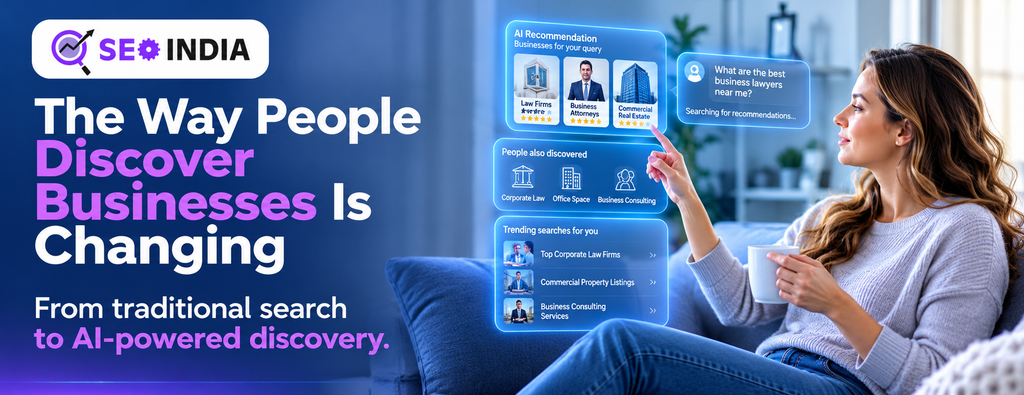
A traditional search engine shows people a list of websites and leaves the research to them. A customer opens several pages, compares what each one says, checks a few reviews and slowly builds an opinion. AI search changes that experience by letting people ask conversational questions and receive a combined answer that already contains explanations, comparisons and suggestions. The customer may never visit most of the websites that informed the response, yet an opinion about which businesses are worth considering is formed in a single exchange.
Consider an online furniture store in Jaipur that has written a few articles on sofa care, plus a product catalog and an about page. Each piece is fine on its own, but nothing explains the store’s materials, its delivery coverage, its customer experiences or how it compares with others. A competitor with guides on choosing fabrics, honest comparisons, real customer stories, clear delivery information and mentions on home-decor websites simply offers more reliable material. When someone asks an AI tool where to buy a durable sofa online, the second store is far easier to include in the answer.
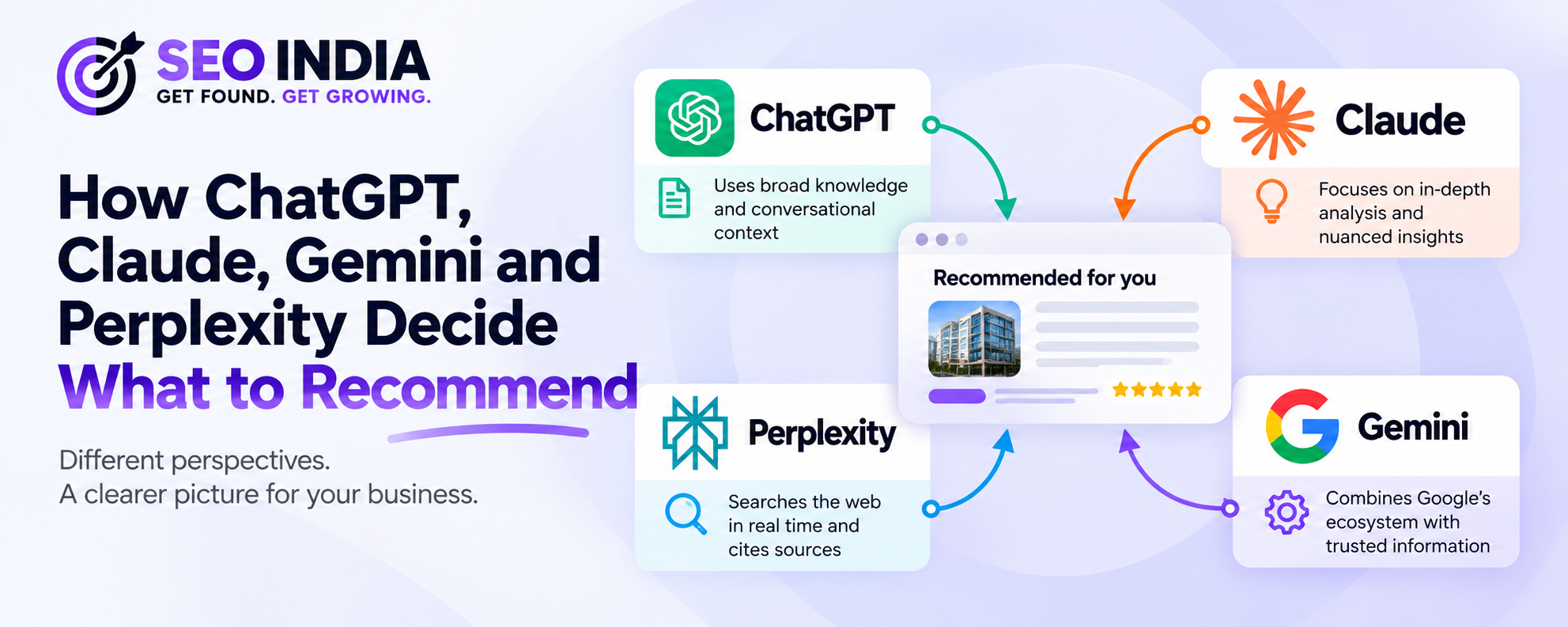
None of this means traditional SEO has stopped mattering. Crawlable pages, helpful content, sensible site structure and genuine authority remain the base that AI visibility is built on, and our article on traditional SEO versus LLM SEO shows how the two work together. Our guide on how ChatGPT, Claude, Gemini and Perplexity decide what to recommend also explains why each platform gathers information differently, which is another reason a connected presence helps everywhere.
Why Is Publishing More Content Not Enough Anymore?
Publishing more used to be a dependable way to grow, because each new page was another chance to rank for a new phrase. AI tools have made that tactic cheaper than ever, which is exactly why it no longer separates one business from another. When a printing shop in Chandigarh posts a daily blog about business cards, brochures and banners using the same tools as every competitor, the result is a pile of articles that say roughly what everyone else says. An AI assistant gathering information has no reason to treat that shop as a distinctive source.

The most common problems follow a pattern. Many thin pages on slightly different keywords end up competing with one another and diluting the message. Business details such as phone numbers, addresses and service lists change over time and are not updated everywhere, leaving conflicting information scattered across the web. Some companies rely entirely on their own website and never earn independent mentions, while others treat the whole effort as a project that ends after a few months, then wonder why visibility fades while competitors keep improving.
A better approach is to publish fewer, deeper and better-connected pieces, each with a clear purpose in the larger picture. AI can still help with research, outlines and organizing ideas, particularly because modern AI search often expands one question into several related searches, a behavior we explain in our guide on ChatGPT query fanouts. But the strategy, the facts and the expertise have to come from the business, because those are the things a competitor cannot generate in an afternoon.
What Is an LLM SEO Content Ecosystem and How Does It Work?
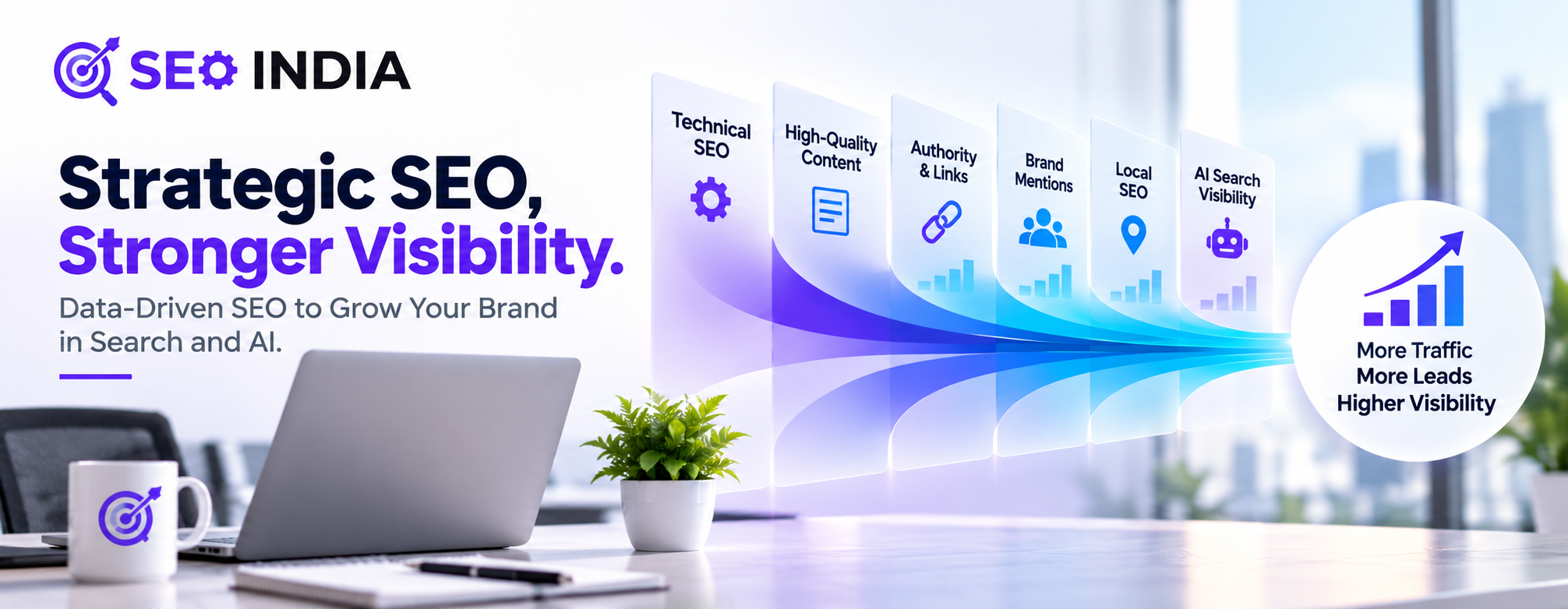
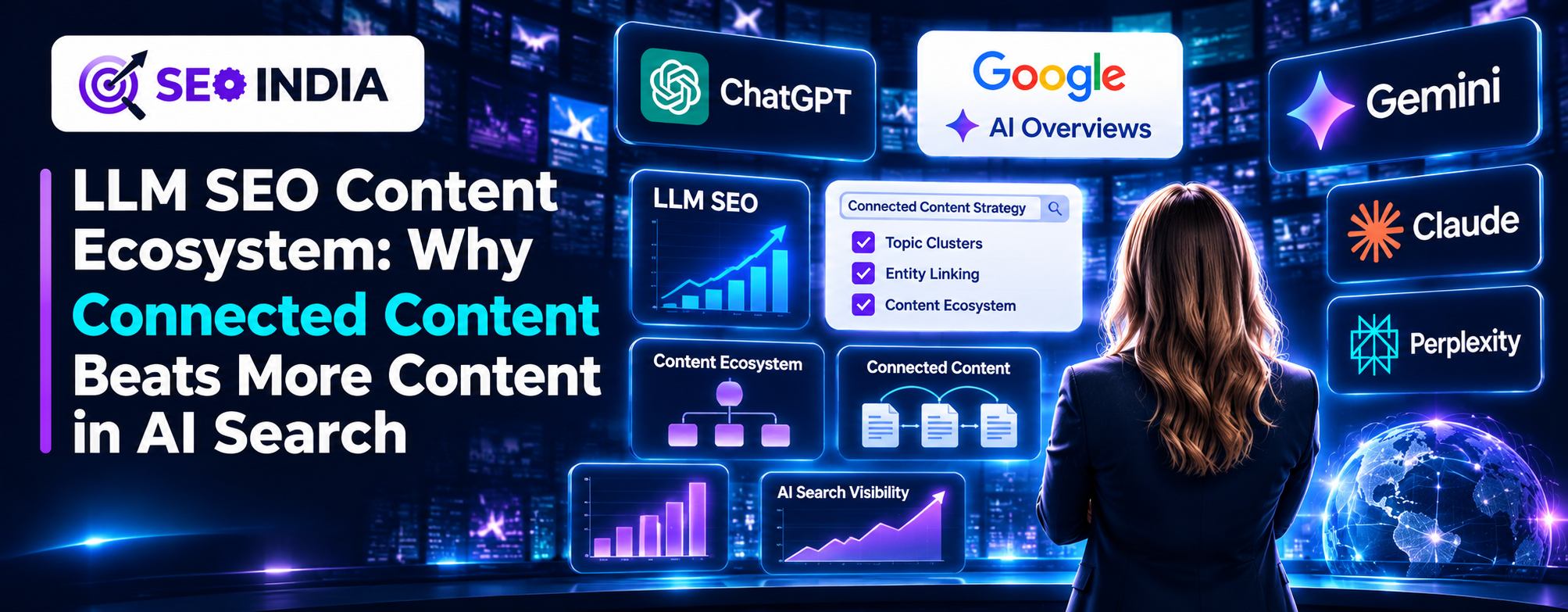
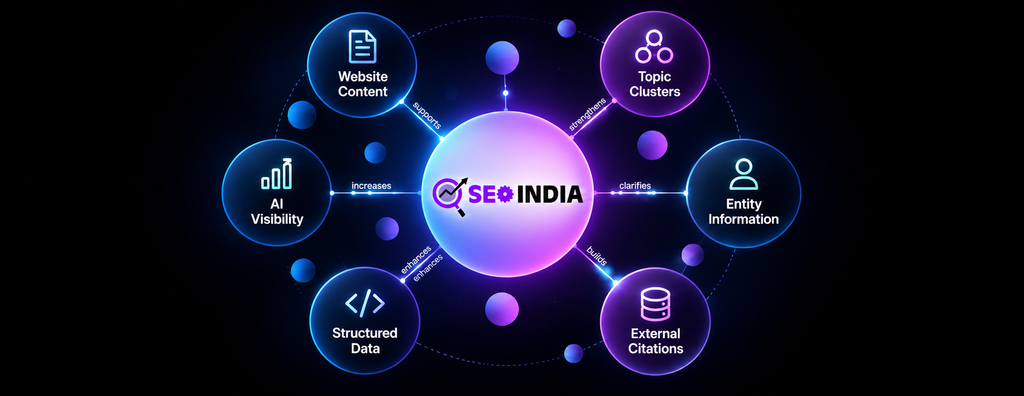
An LLM SEO content ecosystem is a connected network of information that helps search engines and AI platforms understand a business, what it offers and which subjects it genuinely knows. It brings together the pages on your own website, the educational resources you publish, the way your brand is described across the web, the mentions you earn from credible sources and the measurements you use to track progress. The key idea is connection, so that every piece reinforces the others instead of standing alone.
Picture a dental clinic in Noida that wants to be recommended whenever local residents ask an AI assistant about braces or root canal treatment. Its ecosystem starts with accurate treatment pages that explain each procedure honestly, including who it suits, how long it takes and what recovery involves. Around those pages sit helpful articles that answer real patient questions, such as what to expect on the first visit, how to compare aligners and braces, and how to prepare a child for a dental appointment. Beyond the website, the clinic keeps its Google Business Profile complete, collects genuine reviews and appears in local health directories, and every source describes it with the same name, address, specialties and doctors.
When an AI system pulls information about that clinic, it finds a consistent story across several independent places, which makes the clinic much easier to trust than one whose details change from site to site. That is the difference between a collection of content and an ecosystem, and it is why LLM SEO is as much about organizing and connecting information as it is about creating it.
Why Do Entity Building and Brand Recognition Matter for LLM SEO?
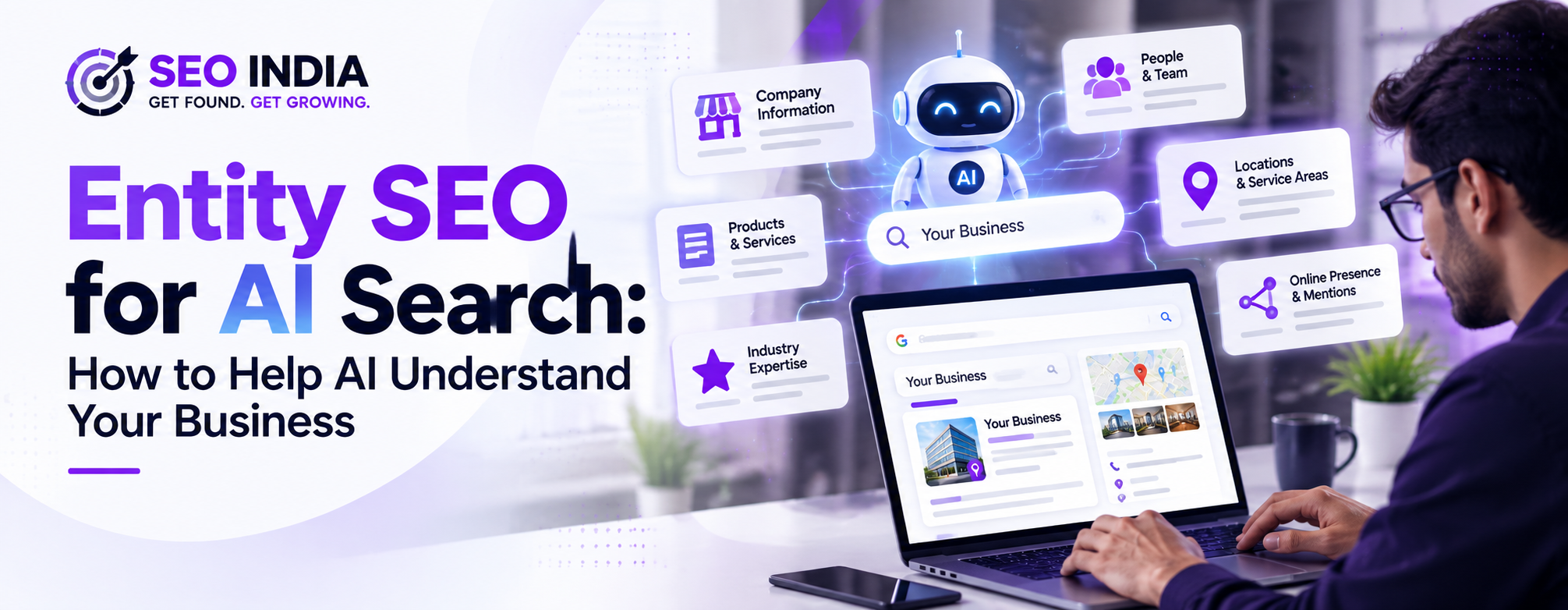
An entity is any clearly identifiable person, company, product, service, place or concept, and search systems learn about entities by gathering information from many sources and noticing how consistently those sources agree. For a business, entity building means making sure its identity is accurate, complete and the same wherever it appears. If your company name, services, location and leadership are described differently across your website, directories and profiles, an AI has a harder time deciding who you are and what you should be trusted for.
Many businesses rush to publish before they have decided how to describe themselves, and the result is mixed messages. A chartered accountancy firm in Gurugram, for example, should decide whether it presents itself mainly as a tax advisory practice for small businesses, an audit specialist or a full-service finance partner, and then use that description consistently across its website, profiles, directories and press mentions. Names of partners, qualifications, service areas and contact details should match everywhere, so that nothing in the picture contradicts anything else.
Structured data can help search engines read your details more clearly, but it is a supporting tool, not a shortcut. Correct markup does not guarantee visibility or a recommendation, and it should only describe information that a visitor can actually see on the page. Our guide on entity SEO for AI search explains the whole process, and the principle is simple: a clear, honest identity does more for you than any amount of markup placed on top of confusion.
How Does Topical Authority Strengthen Your AI Search Content Ecosystem?
Every good ecosystem begins with listening, because you need to understand the questions your customers ask at each stage of their decision, from the first vague worry to the final comparison between providers. Sales calls, support emails, contact form messages and questions on social media are a rich source of this information, and they tend to be more honest than any keyword tool. Take a coaching institute in Lucknow preparing students for competitive exams. Parents might first ask whether coaching is necessary at all, then which courses suit their child’s level, how fees compare, how results are measured and how to tell a reliable institute from a flashy one. If the institute only writes about its course names and prices, it misses most of the journey where trust is actually built.
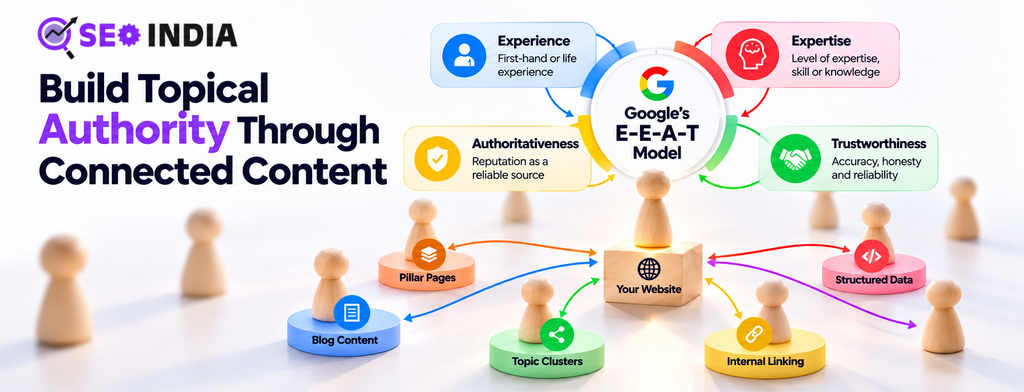
Once you have the questions, group them by theme and decide which deserve a full guide and which can be answered inside a larger page. A pillar page is a comprehensive guide to one major subject, and supporting articles go deeper into specific parts of it, with links showing how everything fits. A real estate consultancy in Pune that wants to be known as a trusted guide for first-time home buyers could build a pillar page explaining the full buying process from budgeting and loan approval to registration and possession. Supporting articles could then cover how to compare builders, what hidden costs to expect, how to check legal documents and how to judge a neighborhood, each linking back to the pillar and to related pieces.
This structure works for AI search because it shows depth and organization together. A system looking for a reliable source on buying a home sees one clear authority page supported by detailed answers, instead of a random set of posts. Our SEO content writing guide explains how to plan and write these clusters so they stay useful and avoid repeating the same points.
Why Do Mentions and Citations From Other Websites Matter?
Your own site will always describe you favorably, so AI systems naturally look for independent evidence that backs it up. Reviews from real customers, mentions in respected publications, listings in trusted directories, partnerships with known organizations and appearances at industry events all add that outside confirmation. They show that other people and sources are willing to vouch for you, which is a stronger signal than anything you say about yourself.

A boutique travel company in Kerala, for instance, benefits when travel bloggers write honestly about its tours, when tourism websites list it, when guests leave detailed reviews and when local hospitality partners mention it. Each of these sources approaches the company from a different angle, and together they build a picture that no single page could. What matters is the relevance and credibility of these references, not how many there are, so a few respected mentions beat hundreds of low-quality listings.
The only sustainable way to earn them is to deserve them. Deliver good service, ask satisfied customers for honest feedback, share useful knowledge with industry publications and take part in your community genuinely. Never buy fake reviews or manufacture discussions, because they damage the trust that makes outside references valuable. Our off-page SEO guide explains how to build this kind of authority responsibly.
How Does Internal Linking Make a Content Ecosystem Stronger?
Internal links are the connective tissue of your website. They guide visitors from one useful page to the next, and they show search systems which pages belong together and which matter most. Without them, strong content can sit alone and unseen, while with them each new article makes the existing ones more valuable, because it adds another route to them.
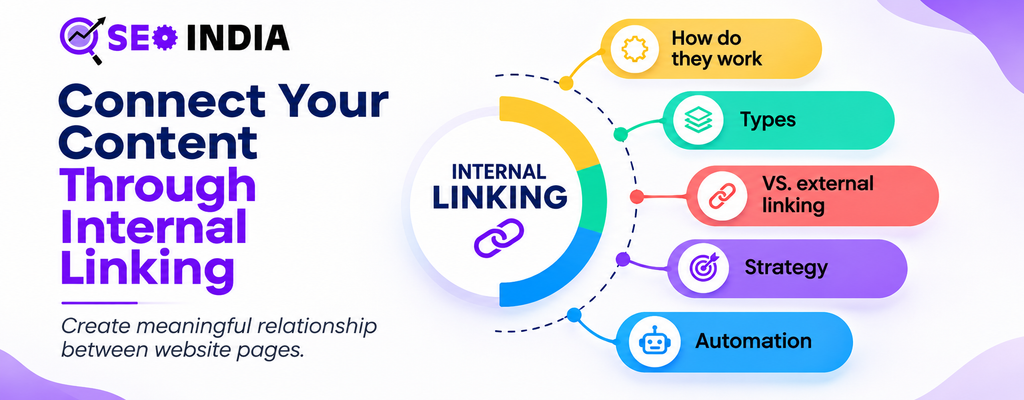
Good internal linking is thoughtful rather than automatic. Each link should help the reader take a sensible next step, such as moving from a general explanation to a detailed how-to, or from an article about a problem to the service that solves it. The words you use for the link matter as well, because descriptive text such as “how to compare home loan offers” tells both people and machines what to expect, while generic text such as “read more” tells them nothing.
It also helps to review your links regularly. As you publish new pieces, go back to older ones and add links to the new content where it genuinely fits, and fix any links that point to pages that no longer exist. A clean, well-planned link structure turns a pile of pages into a navigable body of knowledge, and it is one of the simplest and most overlooked parts of building an ecosystem.
How Should You Structure Content So AI Search Can Understand It?
Clarity is the most useful quality a page can have. An AI system, like a busy reader, wants to see quickly what a page is about, find the main answer and understand the supporting detail. Pages that open with a clear statement of the subject, use headings that match real questions, define unfamiliar terms and give concrete examples are far easier to understand and quote than pages that wander through long introductions.
It also helps to place the most important information where it can be found easily, and to keep each section focused on one idea. If a page on home loans covers eligibility, interest rates and documents, each of these should have its own clearly labeled section with a direct answer at the start. Facts such as prices, timelines, locations and qualifications should be stated plainly and kept up to date, because outdated details reduce trust quickly.
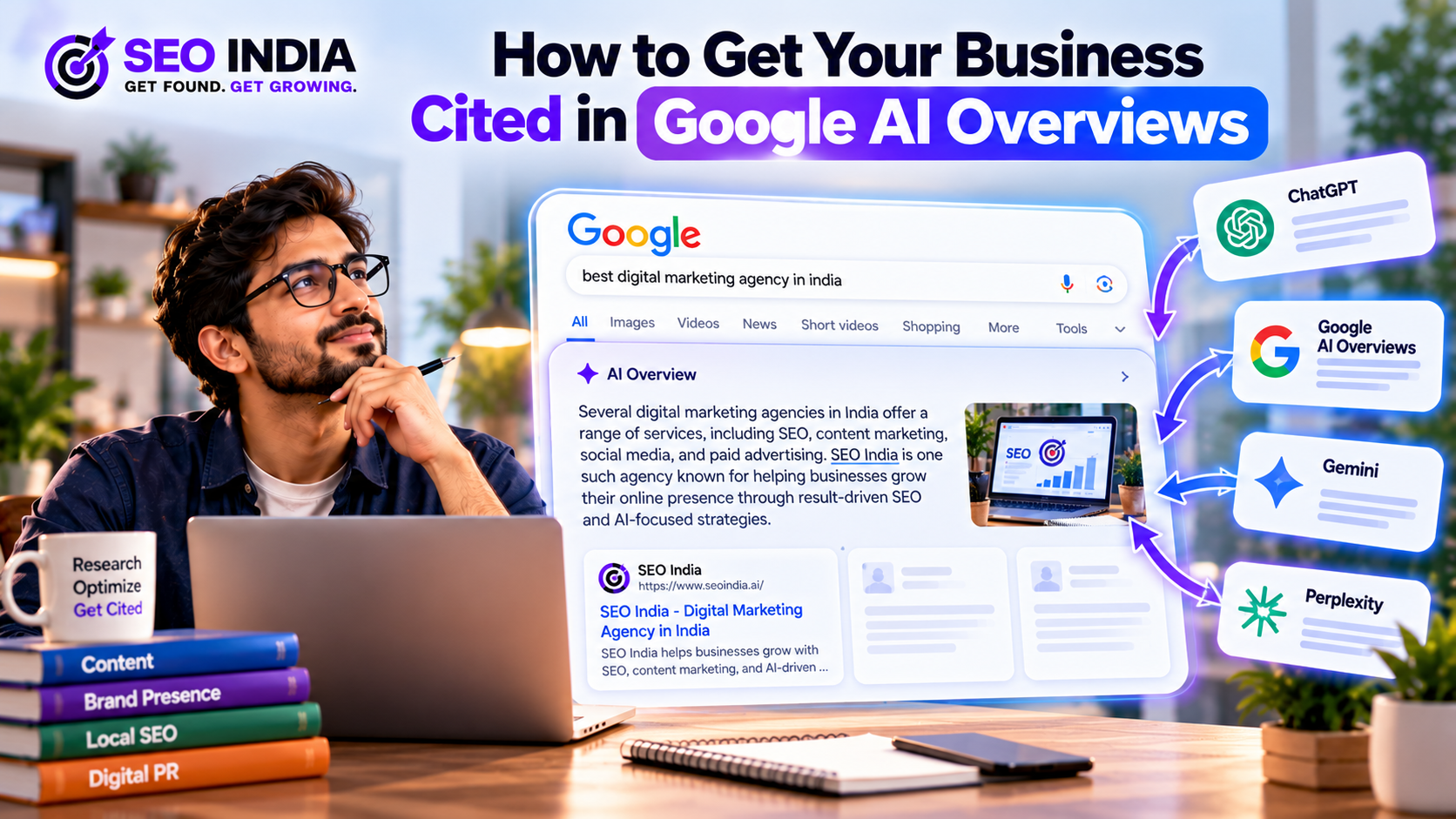
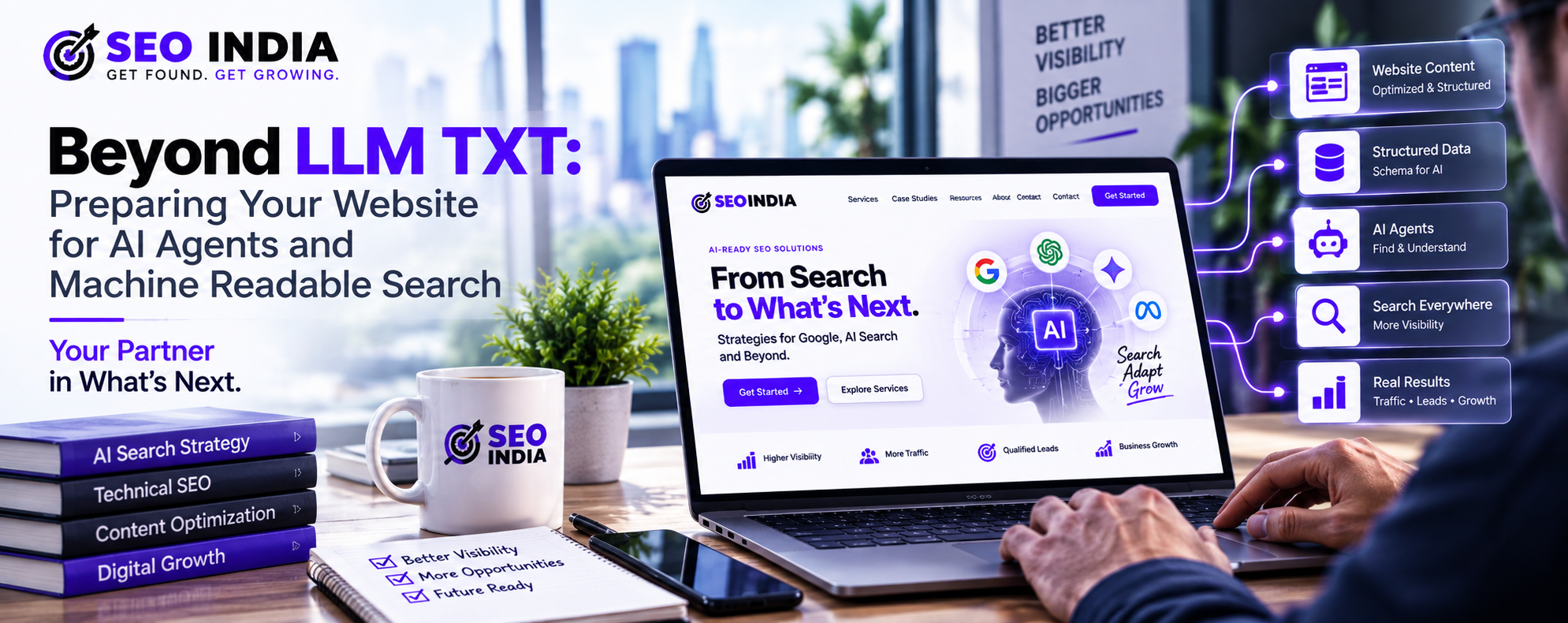
Technical access is part of clarity too. Pages need to load properly, be crawlable and be allowed to appear in search wherever you want visibility, and website owners should check that important crawlers are not blocked by accident. Permission to crawl only makes a page eligible to be used, and it does not guarantee a recommendation. Our technical SEO guide lists the checks to run, and our article on getting cited in Google AI Overviews shows how clear writing supports visibility in a major AI feature.
Why Are Original Research and Human Expertise Becoming More Important?
When anyone can produce an acceptable article in minutes, the knowledge that only you possess becomes your biggest advantage. Original insight can be as simple as what you have learned from a thousand customer conversations, the mistakes you see people repeat, the patterns in your own sales or support data, or the results of a small survey you ran among your clients. This kind of material cannot be copied from a competitor, which is exactly why it makes your content worth citing.
An e-commerce brand selling handmade soaps from Mysore, for example, might share what its customers most often ask about skin sensitivity, which ingredients cause the most confusion and how repeat purchase patterns change across seasons. A local manufacturer could explain what its buyers frequently get wrong when ordering custom parts. These observations are specific, practical and honest, and they show real experience in a way generic advice never can.
AI tools can help organize and summarize this material, but a knowledgeable person must check the facts and decide what to publish. Be open about how you gathered the information, state its limits and never present a small sample as proof for an entire industry. Content that shows genuine experience, names its authors and tells the truth about its evidence is more useful to readers and gives AI systems a stronger reason to trust it.
How Can SEO India Help You Build an LLM SEO Content Ecosystem?
At SEO India, we treat the content ecosystem as a business asset that grows over time, not a one-off campaign. We begin by listening, learning how your customers describe their problems, which questions they ask AI tools and search engines, and how your brand and your competitors currently appear. From that research we build a clear picture of the gaps, such as questions nobody on your site answers, details that conflict across the web or authority your competitors have that you lack.
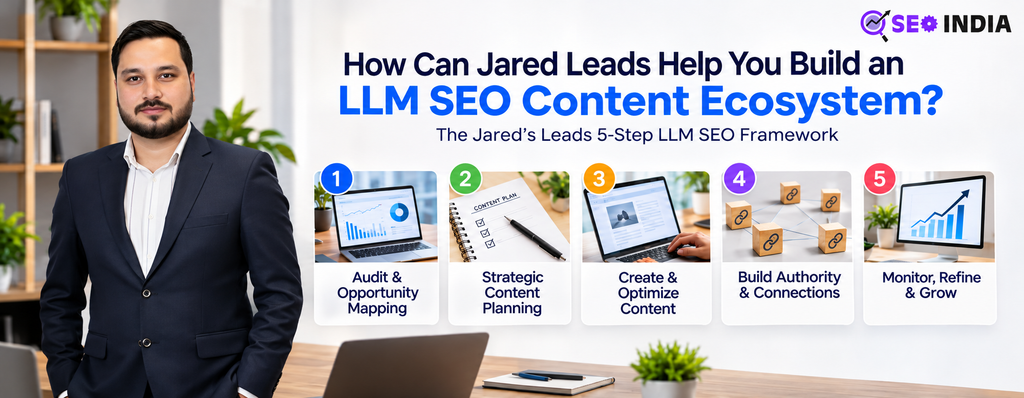
Next we organize what you already have, tidying your site structure, aligning your brand details and planning the guides and supporting pages that will form your topic clusters. We then help you create content that carries real expertise, supported by honest outside mentions and a clean technical foundation, and we track progress with a consistent method so you can see what is improving and what needs more work. We do not promise a particular number of AI mentions or a fixed position, because no honest provider can control how AI platforms respond.
What we can offer is a disciplined process and clear reporting that connect your visibility to real business outcomes. You can explore the full range of our work on the AI-powered SEO services page, or contact our team to talk through your own situation.
How Should You Measure the Success of Your Content Ecosystem?
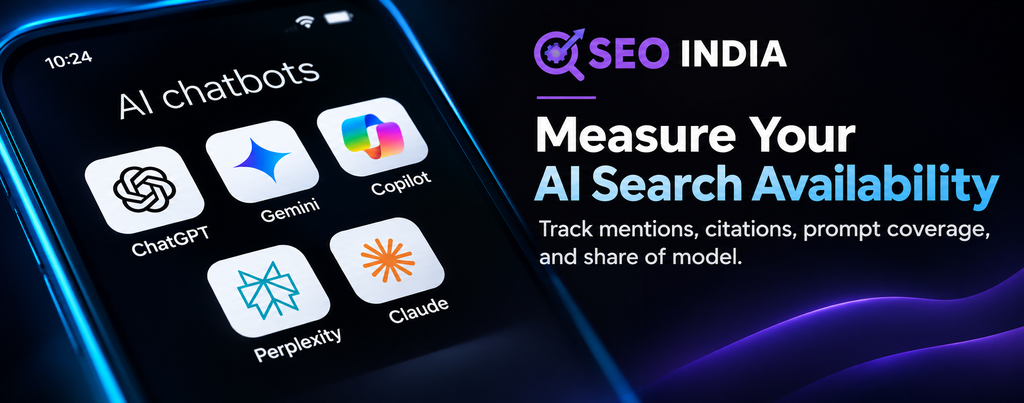
Start with a baseline. Write a list of questions your customers genuinely ask, run them through the AI platforms that matter to your market and record whether your brand is mentioned, how it is described, which competitors appear and which sources are cited. Repeat the same process every month using the same questions, so that changes reflect real movement instead of random variation. A single check on a single day should never be treated as proof, because AI answers can differ between platforms and even between sessions.
Then look at what happens on your own side. Watch your branded search trends, referral traffic from AI platforms where it can be measured, enquiries, calls and form submissions, and pay attention to whether the leads that arrive match the customers you want. Some people will also tell you directly how they found you, and adding a simple “how did you hear about us?” question to your forms can reveal discovery that analytics alone cannot see.
Bring these views together instead of reading each in isolation. Rising mentions without more qualified enquiries suggest you may be visible for the wrong questions, while more enquiries without more mentions may point to other marketing at work. Our guides on SEO KPIs and how to rank in AI search platforms explain how to set this up step by step.
Why Must a Content Ecosystem Keep Evolving?
A content ecosystem is never finished, because customer questions, competitor strategies, outside sources and AI products all keep changing. A business that builds strong visibility today cannot assume the same content and signals will protect its position next year. Treating this work as a one-time project is one of the quickest ways to watch hard-won progress fade.
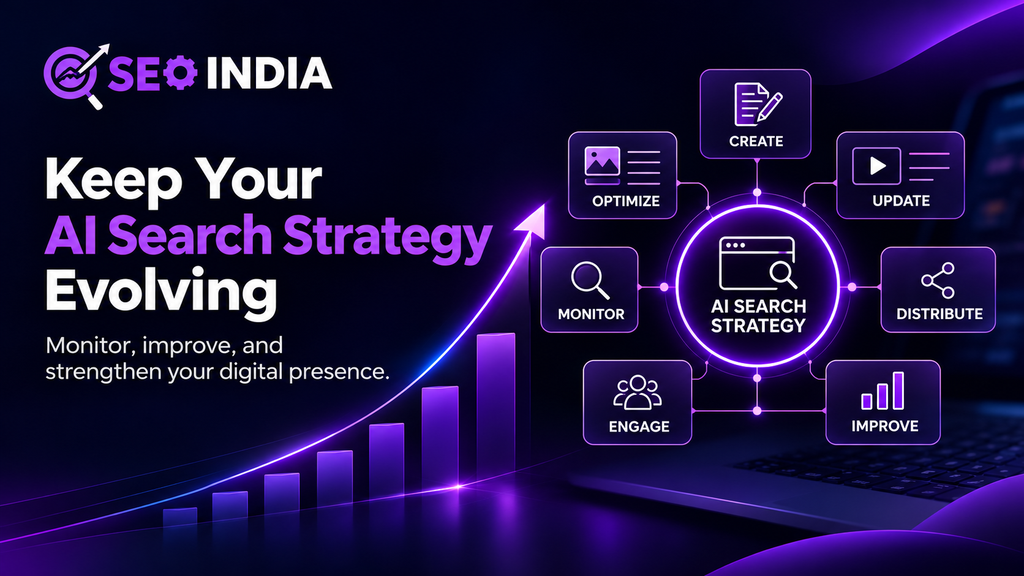
Take an IT training institute in Hyderabad that built a strong set of guides on data analytics courses. A year later, new tools have become popular, students are asking different questions about placements and some of its older articles quote outdated course details. Unless the institute reviews its content, adds answers to the new questions and corrects old facts, a competitor that keeps its pages fresh will gradually become the more trusted source. Watching what competitors publish, and which outside sources start mentioning them, tells you where to respond.
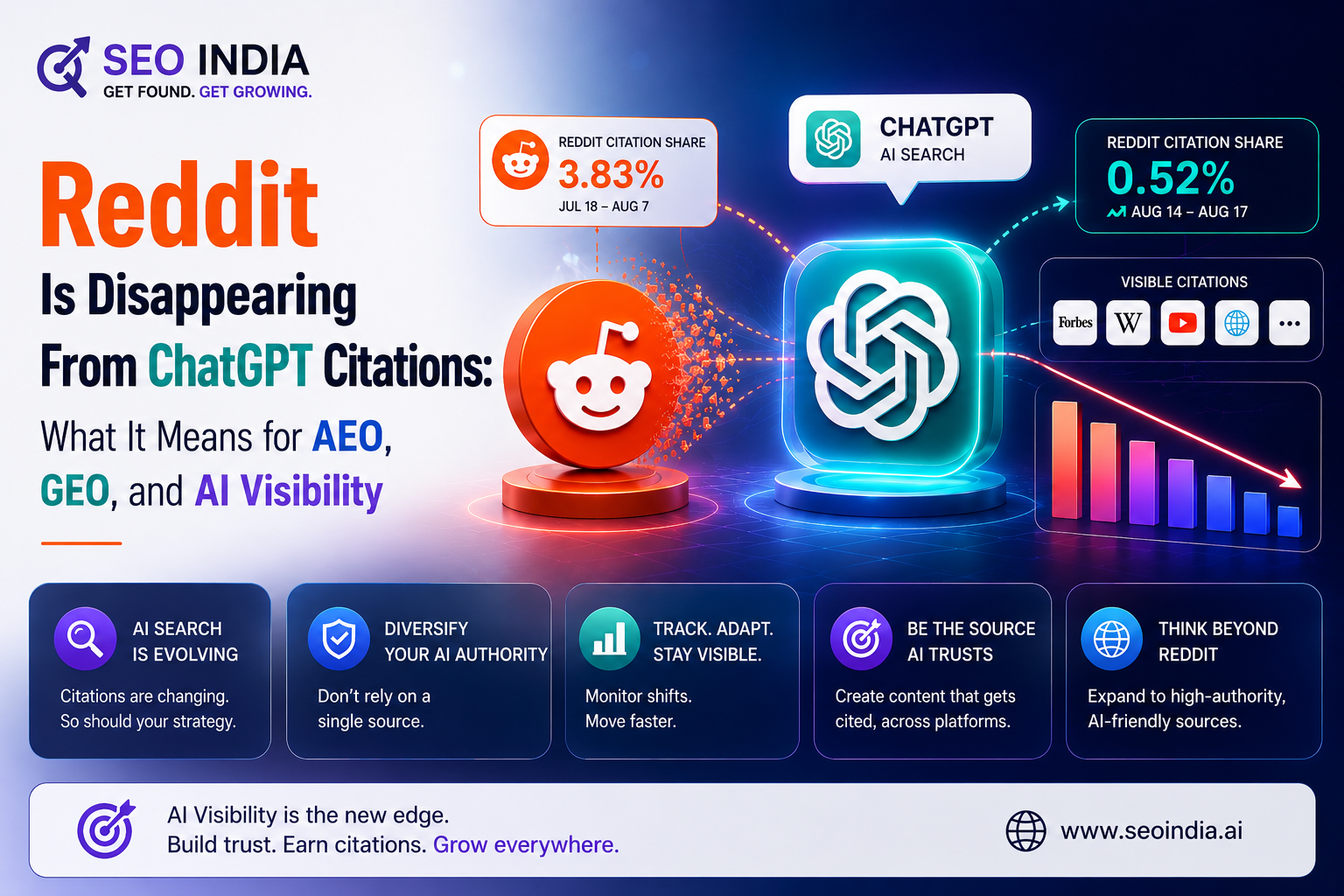
It is equally wise to avoid depending on any single outside platform. The way community sites appear in AI answers has shifted over time, as we discuss in our article on Reddit and ChatGPT citations, and a strategy built on one source can collapse when that source changes. A varied presence, kept fresh through regular updates, original insight and periodic checks of which sources AI platforms use, is far more resilient as AI search keeps evolving.
Frequently Asked Questions About LLM SEO Content Ecosystems
What is an LLM SEO content ecosystem?
It is a connected set of website pages, helpful articles, brand details and trusted outside references that together help search engines and AI platforms understand a business and its expertise. The emphasis is on how the parts support one another, rather than on any single page.
Is it different from a normal content strategy?
A normal strategy often focuses on publishing pages around keywords, while an ecosystem also looks at brand identity, topical depth, internal links, outside mentions and measurement. It keeps the best of traditional SEO and adds a wider view of how AI platforms find and use information.
Will publishing more articles with AI tools improve my visibility?
Not by itself. AI tools can speed up research and drafting, but visibility depends on accuracy, originality, relevance and trust, which come from real expertise and careful editing. A few strong, connected pages usually outperform many generic ones.
Why do reviews and outside mentions matter?
They provide independent evidence that supports what your own website says. When several credible sources describe your business consistently, it is easier for AI systems to trust and mention you, although no single mention can guarantee a recommendation.
How long does it take to see results?
It depends on your industry, competition and starting point, and results tend to build gradually over several months. Because AI answers vary, it is best to judge progress by trends across many questions rather than by one-off checks.
Does traditional SEO still matter?
Yes. Crawlable pages, helpful content, sound technical health and genuine authority remain the foundation. An ecosystem builds on that foundation instead of replacing it.
How can SEO India help?
We review your current visibility, find content and brand gaps, build a plan around your customers’ real questions and track progress over time. To see where you stand today, contact SEO India for a review.
Conclusion: Why Connected Content Ecosystems Are the Future of LLM SEO
AI search is changing the question every business has to answer. It is no longer enough to ask how many pages you have or where a single keyword ranks. The better question is whether your brand tells one clear, believable story across your website and across the wider web, so that an AI system looking for a trustworthy answer can find you, understand you and feel confident including you.
Building that story is practical work. Define who you are, map the questions your customers ask, create connected guides that answer them honestly, support them with real reviews and credible mentions, link everything sensibly and measure your progress with a steady method. Add the knowledge that only your business has, and keep reviewing it as customers and platforms change. None of this is a shortcut, but it builds a reputation that lasts longer than any one trend.
Businesses that treat content as a connected ecosystem give AI platforms good reasons to remember them. Those that keep adding disconnected pages give those same platforms very little to hold on to.
Schedule Your AI Visibility Consultation With SEO India
Want to know how your brand appears across AI search platforms and where the biggest opportunities are? SEO India can review your current visibility, find the gaps and build a plan tailored to your business. Explore our AI-powered SEO services, get your free SEO proposal, or contact our team today.
About The Author
SEO India
SEO India is a search marketing and digital growth agency specializing in AI-powered SEO, LLM SEO, local SEO, and PPC advertising. The team helps businesses of all sizes improve their rankings, attract qualified traffic, and build a strong presence across Google and AI search platforms like ChatGPT, Gemini, Claude, and Perplexity.