Key Takeaways
⌃- Key Takeaways
- The Data behind the Launch
- Why This Channel Behaves Differently
- Where the Early Opportunity Is Clearest
- The Bigger Picture
- Why Businesses Trust Us
- FAQs
- Conclusion
Key Takeaways
- ChatGPT’s advertising business hit a $100 million annualized run rate within six weeks of launch — while only reaching a small slice of its actual audience.
- Under 20% of eligible users were even shown an ad during that period, meaning the real ceiling for this channel is far higher than current numbers suggest.
- What used to be an invite-only pilot with major agency partners is now fully self-serve, open to any business.
- The old $50,000 minimum commitment is gone, meaning a small or mid-sized Indian brand can now test the platform with whatever budget it actually has.
- ChatGPT now sees 800 million weekly active users and processes 2.5 billion prompts a day.
- The advantage sits with whoever tests this first and that window is already starting to narrow as more advertisers sign up.
Not even a few months ago, advertisements on ChatGPT were exclusively OpenAI approved. Most businesses, including the majority of Indian companies, did not have access to that.
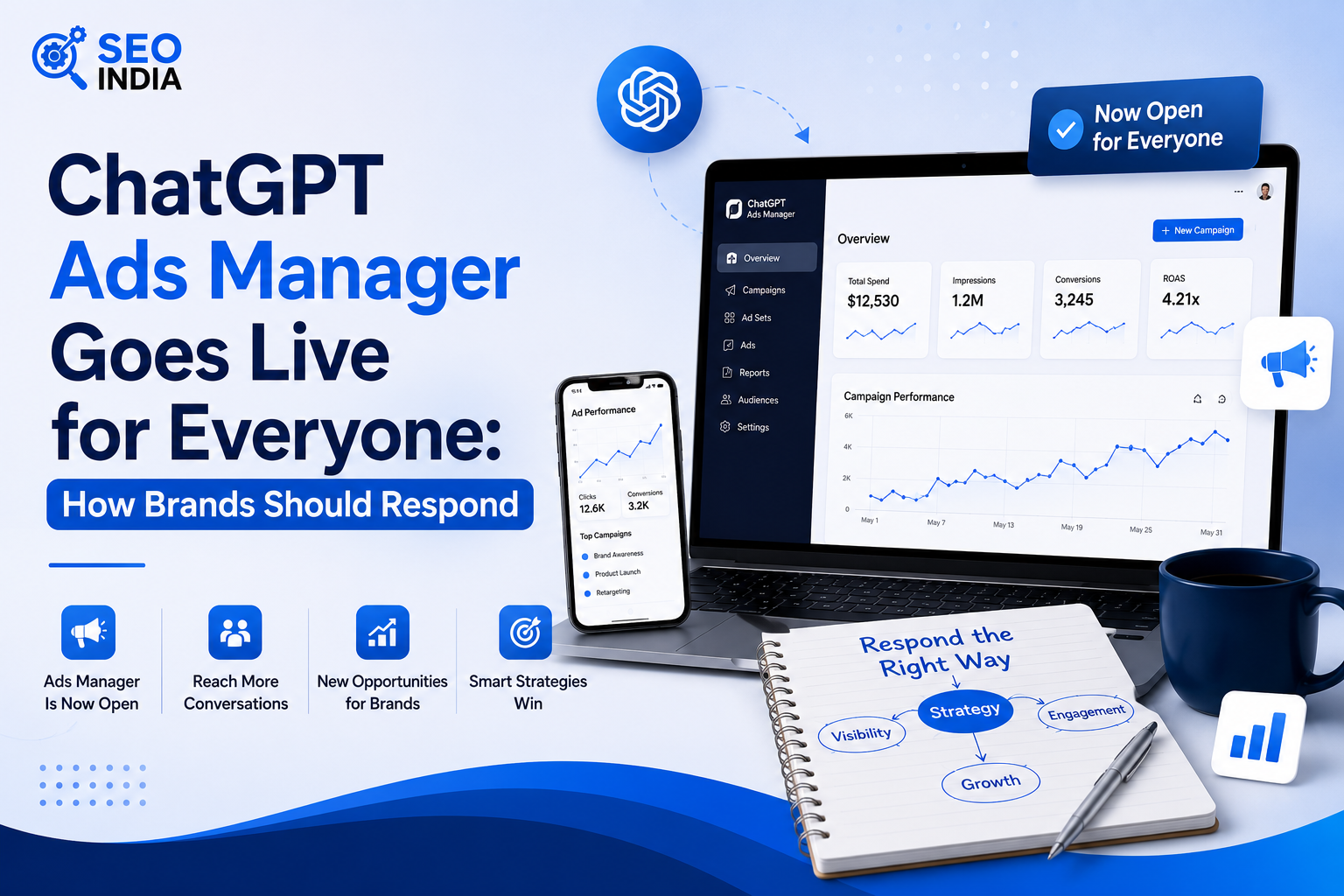
This has completely transformed. Now, any business can open an account, determine their budget, and launch campaigns directly (meaning no agency is needed and no minimum expenses to clear first). Since it is still early, the expenses to be the first is lower now than what it will become in a year.
The Data Behind the Launch
A run rate of $100 Million annually in the first six weeks is impressive any way you look at it. If that wasn’t enough, it is even more interesting if you factor in how it was achieved. Less than 1 in 5 users who were eligible to see OpenAI’s advertisements were actually shown the ads. Most of the advertisements for the users of the Free and Go tiers (< 85%) are eligible, meaning the advertisements are yet to be shown.
If those figures came from under 20% of users eligible to see the ads, that actually means that the revenue can actually multiply many times over as OpenAI expands ads to more users, assuming that the ads are trustworthy and of good quality, which so far has proven to be the case.
The largest change was in May 2026 when OpenAI made their self-serve Ads Manager actually available to the public. Before that, to even gain access to the platform, there was a minimum $50,000 commitment, which basically made the platform available only to enterprise brands and their agencies. That made the platform completely irrelevant for most Indian SMEs.
That barrier is gone. You can get your campaign up and running without an agency to get you access. Instead, you can set a budget that works for your business, whether that’s a small daily spend or a large monthly spend.
OpenAI has built out infrastructure to support performance based advertising. You can track conversions and run pixel based campaigns. This is really important when you’re accustomed to running performance based campaigns on Google or Meta. This really makes a difference to spending, because this is not a spend based advertising platform.
OpenAI will continue to roll out to more countries and has confirmed many of them, such as the UK, Canada, Australia, Japan, South Korea, Brazil, and Mexico. Although India is not set in this first wave, there is a large ChatGPT user base in India, and it is not unreasonable to predict that a rollout will happen there in a reasonable time period. Even in advance of that, right now is a good time to learn the platform. You won’t be starting from scratch in India when it opens up.
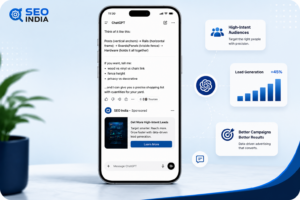
Why This Channel Works Differently
They will see poor results and draw the conclusion that the channel is not effective for them if advertisers treat this like Google or Meta campaigns and try to skip the proper channel use.
Consider how different users arrive at an ad here and then elsewhere. With Google, a lot of people are early on in their research, comparing options, and, a lot of times, just browsing. With Meta, the users aren’t even looking for anything and the ad interrupts their scroll. With ChatGPT, users are usually in the middle of their problem already, with a lot of options, and have had a real multi-turn conversation already. They have asked questions and have received answers and have had the AI compare a lot of the options. The AI has actually accomplished a lot of the pre-qualification that you needed to do. The user is not looking for a category to understand, they are looking for the answer to a question and are looking for that answer quickly.
Because of all the differences you are going to have to account for in order to achieve what is necessary and what is valuable, explain to the users who you are and how you can help. If users already understand the category, they need to know you’re the best choice and who you are, with the least friction possible.
Targeting uses a completely different system. Unlike keyword biddings or demographic groupings, ChatGPT uses the subject of a person’s current conversation, their overall chat history, and their past ad response history to match ads. This is a more advanced signal than most advertising channels provide, but makes traditional keyword strategies more difficult. The more advantageous strategy is learning what kind of language individuals use to explain their thought process to an AI, and use that to formulate your response.
Regarding trust, OpenAI has publicly stated that less than 7% of the ads shown have been flagged by users for irrelevance, and that keeping this number low is a primary goal to ensure that this number is not an afterthought. This is likely a reason they felt assured moving from a small and controlled pilot to a full self-serve system this rapidly, as there was no early trust or dismissal metric impact. For advertisers, this is a positive outlook, as it signals to them that the platform will likely not become overrun with bad ads of poor targeting that damage user trust and advertising performance, a trend that has occurred on other ad channels in their initial stages.
Where the Early Opportunity Is Clearest
This format is not ready for all market categories, and you should set aside a test budget only when you believe a market category is ready. This format is most aligned to use cases where buyers are already using ChatGPT to help make purchase decisions. Examples include, but are not limited to, various B2B software, financial services and products, healthcare, and travel. ChatGPT use cases in these markets may involve several sessions with ChatGPT to help answer different questions before the customer actually reaches the vendor’s website.
Higher-ticket ecommerce purchases are also a great fit for this format when buyers are using ChatGPT to compare features or specifications for items like appliances and electronics, etc. Low-value, impulse purchases are a weaker use case for this format, as there will be insufficient back-and-forth transactions within the ChatGPT session. The shopping carousel format will be a better bet for these use cases.
A simple way to start testing. Open ChatGPT. Type the questions your customers would ask. Type the questions the potential customers would ask. This will help shape your Ad Copy. It is important to see how ChatGPT constructs its answer. Pay attention to the prompts and how the AI arrives at them. Answers to your questions will help you interpret how the AI will respond to the AdCopy. It will help you shape the answers for the prompts you will provide. This is a new space that few advertisers are using, the cost to Advertise now is significantly cheaper than if other competitors start to use this space.
Focus on learning. Don’t think this as a way to see a quick ROAS. Spend this time developing a budget and see where you can grow your product in your industry. This is the same for Google Ads and Meta. The first time you spend this money is for research and development and not for making the money back.
The Big Picture
Let’s step away from the money for a minute. Look at the way ChatGPT is changing the culture of the society we live in. ChatGPT processes 2.5 billion prompts a day. More than 800 million people use ChatGPT a week. This is now a main stream product for people to get answers. This is a product people are using now to compare and find other products and even other brands without using search engines.
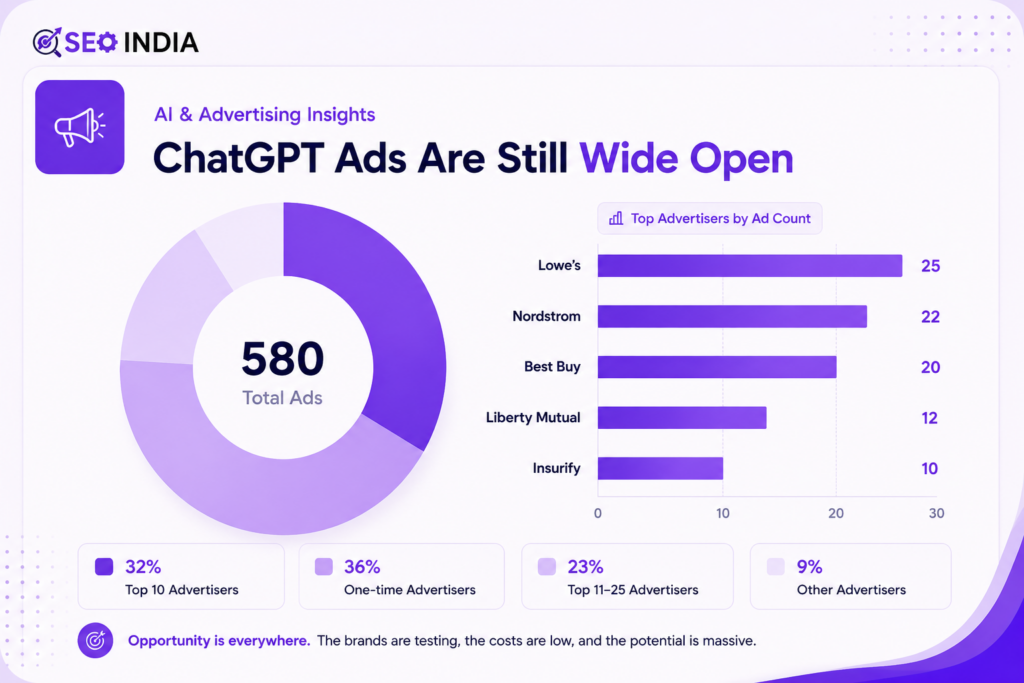
The comparison to Google’s or Facebook’s ads in their infancy years is fairly accurate. For each of those platforms, there was limited access and relatively low competition. Early adopters had the advantage of faster customer acquisition. This gap was never fully closed by their competitors. Some of the largest digital-native companies grew largely because they entered new channels before their competitors did.
A limited competition environment exists on ChatGPT. This is not going to last. As more marketing teams and agencies gain self-serve access, and as competitors and entire industries start to put more significant budgets into ChatGPT, the same auction dynamics will apply as they have in other environments. Costs will rise. Targeting will become more difficult. The current opportunity for easy wins will be lost.
Why Businesses Trust Us
At SEO India, we don’t chase every new platform just because it’s trending — we test it the same disciplined way we approach any paid channel: clear tracking, honest reporting, and a focus on what actually moves the needle for your business, not just what looks good on a dashboard.
Our team brings hands-on experience across SEO, paid media, content strategy, and now emerging AI-driven advertising, which means we’re not learning a platform like ChatGPT Ads in isolation — we’re plugging it into a broader strategy that already understands your customer, your funnel, and your numbers. We work closely with founders and marketing leads across a range of industries, staying grounded in what’s actually delivering results rather than what’s simply getting attention online.
Clients stick with us because we’re upfront about what’s working and what isn’t, we never oversell a channel just because it’s new, and we treat every rupee of ad spend like it’s our own. Whether it’s a first Google Ads campaign or a first test on a platform as new as ChatGPT Ads, our standard stays the same: measure everything, learn fast, and scale only what’s actually proven.
Frequently Asked Questions
Do ads on ChatGPT change its responses to users?
They do not. OpenAI has been very clear that ads will never change responses generated by ChatGPT. Sponsored content is clearly distinguished and advertisers are only shown aggregated metrics.
Who actually sees these ads?
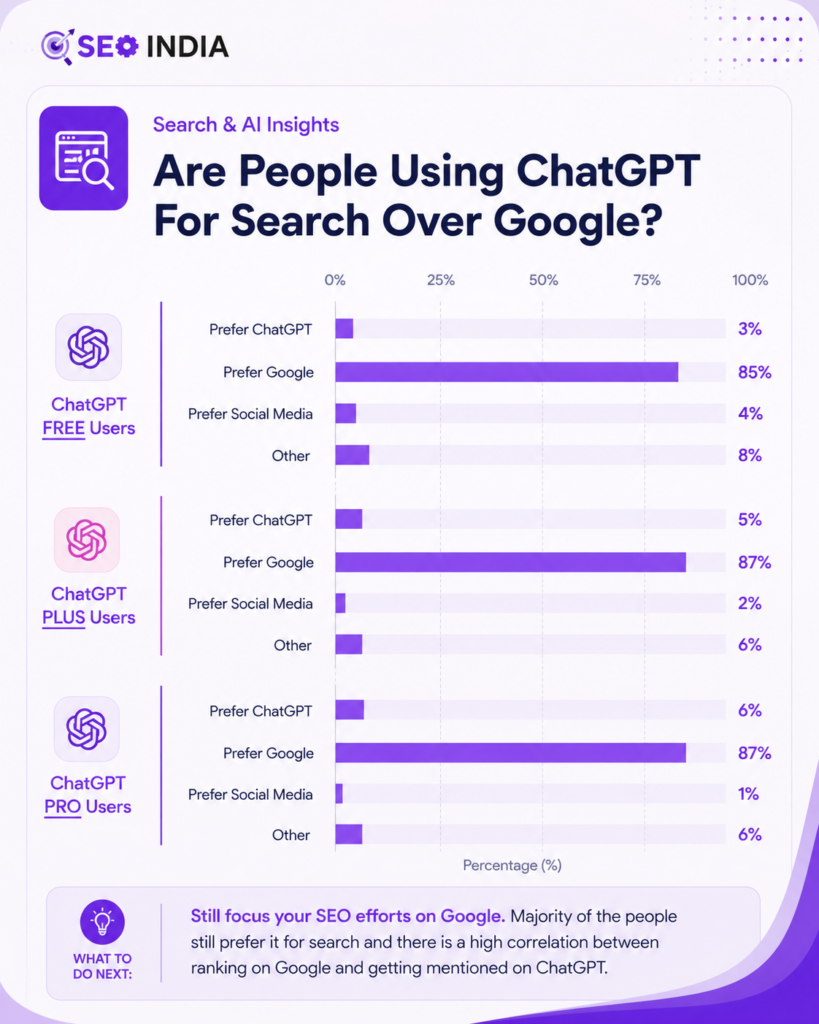
These ads are only shown to adult users on the Free and Go plans. Users of Plus, Pro, Business, Enterprise, Education, and all other paid plans do not see ads. The addressable audience is ChatGPT’s free-tier users.
How does targeting here differ from targeting on Google or Meta?
Instead of relying on demographic categories or keyword bidding, ChatGPT uses the topic of someone’s current conversation, their chat history, and how they have previously interacted with ads to match ads. Compared to what most platforms use, this is more contextual and carries intent.
Do I need a separate landing page for this traffic?
Absolutely. People coming from a ChatGPT ad have generally had a lengthy conversation about the issue they need to solve. Therefore, generic landing pages are unhelpful because they do not account for the context of the advertisement. Based on what users were probably talking about, get them the answer they need the quickest.
Is this worth trying for a smaller business?
This is especially true for smaller businesses as the minimum spend rule has been abolished. This is a huge opportunity for smaller businesses to have the same advertising capabilities as large businesses, especially with this new ad channel and the low competition and low costs.
Conclusion
Only using a small percent of eligible users and reaching a $100 million annualized run rate is not a small accomplishment. This shows how quickly this channel could expand once more businesses recognize that the barriers previously restricting them are now gone and once access and audience expand.
Spending a little to test early has proven to work. Knowing your channel helps avoid difficulties when the channels become more competitive. Businesses willing to test now will know what performs best, what messages resonate best, and how to create a useful landing page for people who arrive informed. These companies will have a huge advantage over everyone else who is hesitant to engage.
Need some assistance to get your first ChatGPT ad campaign up and running? The first step in our process is setting up your ad campaign for testing. The next step is creating and placing conversational advertisements. We do this to keep our work focused.