Key Takeaways
Key Takeaways
⌃- What Are Google AI Overviews?
- Why AI Overviews Change the Way Customers Find You
- How Google Decides Which Pages to Use
- Start With a Strong Technical Foundation
- Answer the Question Early and Clearly
- Show Real Expertise and Trust
- Use Structured Data and Clear Entities
- Strengthen Your Local and Brand Signals
- Measure Your Visibility in AI Overviews
- Common Mistakes to Avoid
- How SEO India Can Help
- FAQs
- Final Takeaway
Many searches now start with an answer, not a list of links.
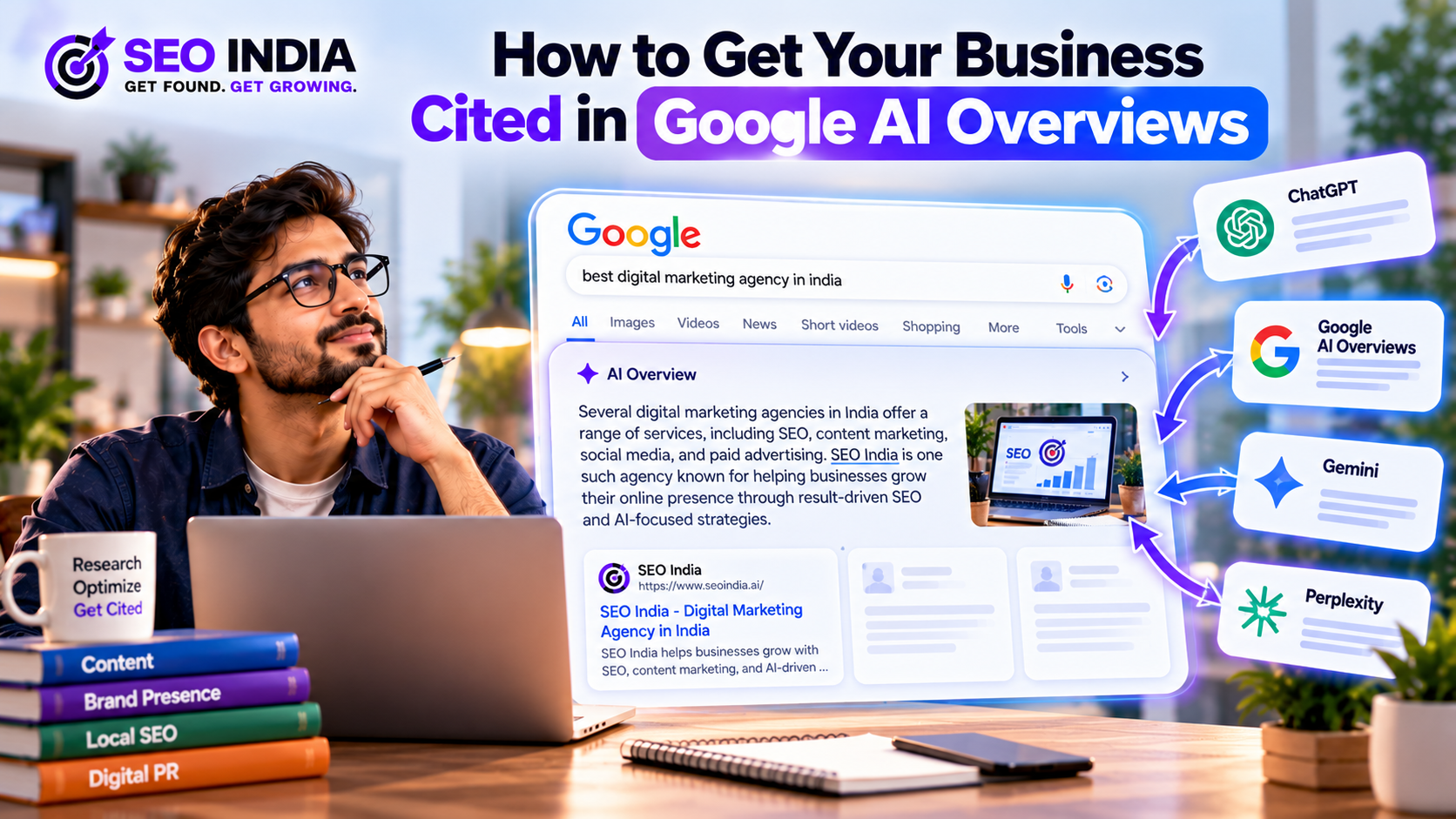
When someone searches on Google, an AI-generated summary can appear above the regular results. It pulls together information from several pages and often links to the sources it used. For a business, being one of those sources can mean visibility before the customer scrolls at all.
No outside marketer knows the exact formula Google uses to choose those sources, because the system is proprietary. What we can do is look at how it behaves, what Google says publicly about quality, and which practical signals a business can strengthen. That is the approach we follow at SEO India, and it sits at the core of our AI-powered SEO services.
What Are Google AI Overviews?
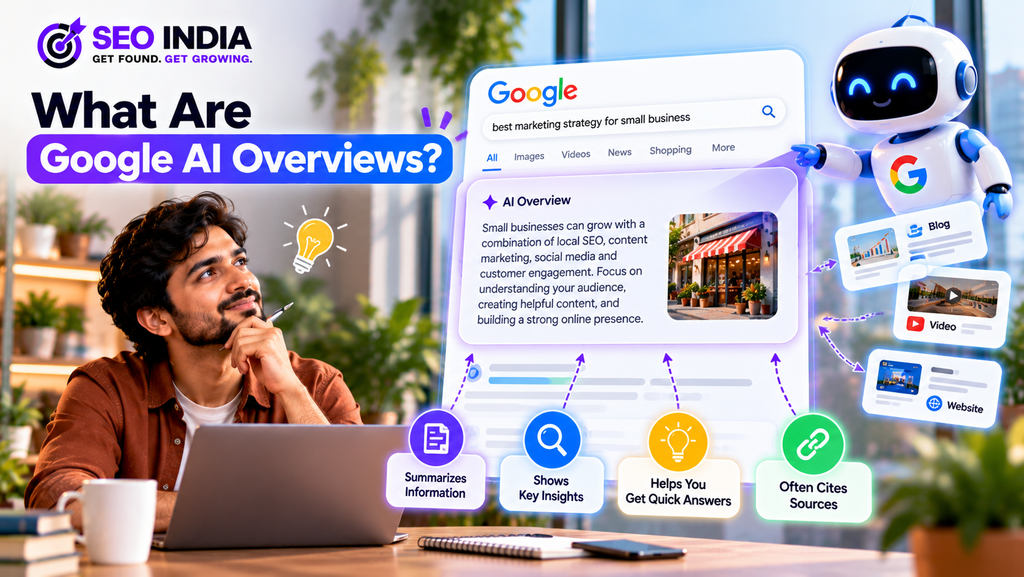
AI Overviews are summaries Google generates for certain searches. Instead of making the user open several pages to compare information, Google reads across multiple sources and presents a short, combined answer, usually with links to the pages behind it.
They tend to appear most often for questions that need explanation, comparison or a few steps, such as “how does local SEO work” or “what should I check before hiring an SEO agency.” Simple searches, like looking up a specific website, may not show one.
Why AI Overviews Change the Way Customers Find You
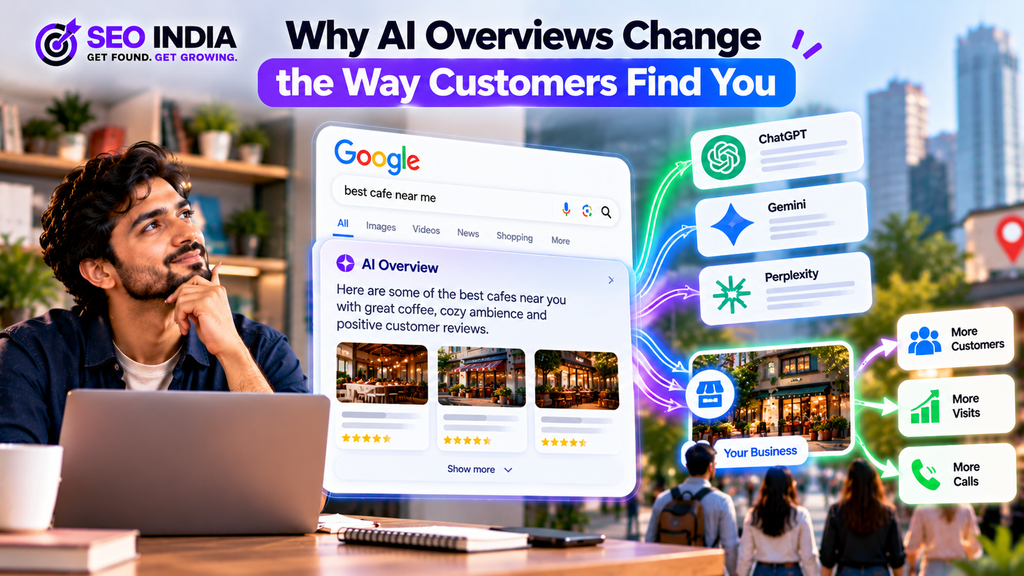
In classic search, the goal was to rank high enough to earn the click. With AI Overviews, a customer may get what they need from the summary and never open a page. That can lower clicks even when your rankings hold steady.
This changes what visibility means. Being cited inside the summary puts your brand in front of the customer at the moment they’re forming an opinion. Being absent means a competitor may get that moment instead. It’s why traditional SEO and LLM SEO now need to work together.
How Google Decides Which Pages to Use
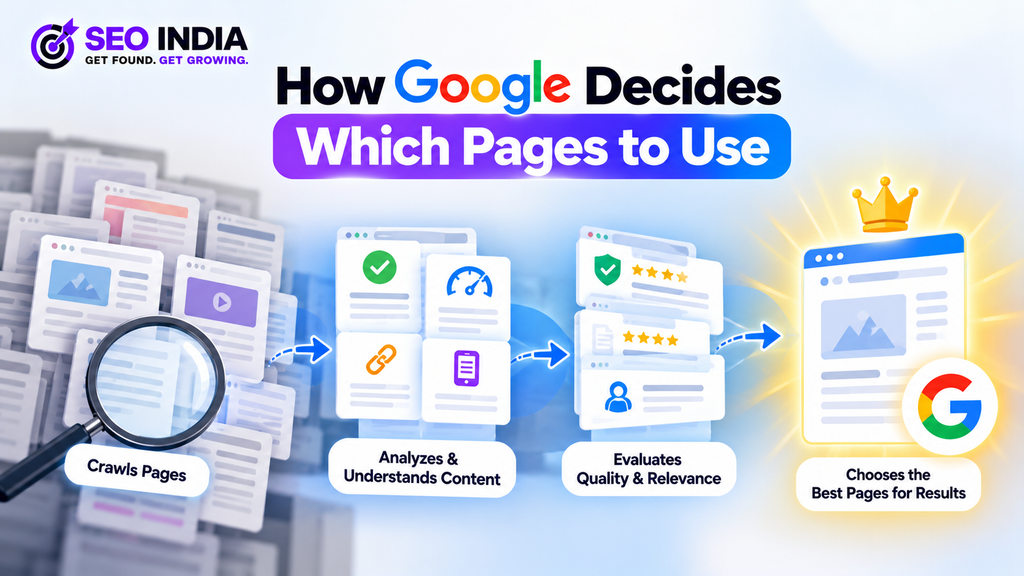
Google’s AI Overviews draw on the same understanding of the web that powers regular search. While the exact selection process isn’t public, pages that are used tend to share a few qualities:
- Relevance. The page clearly addresses the question being asked.
- Clarity. The answer can be pulled out without guesswork.
- Credibility. There are signs the source knows the subject.
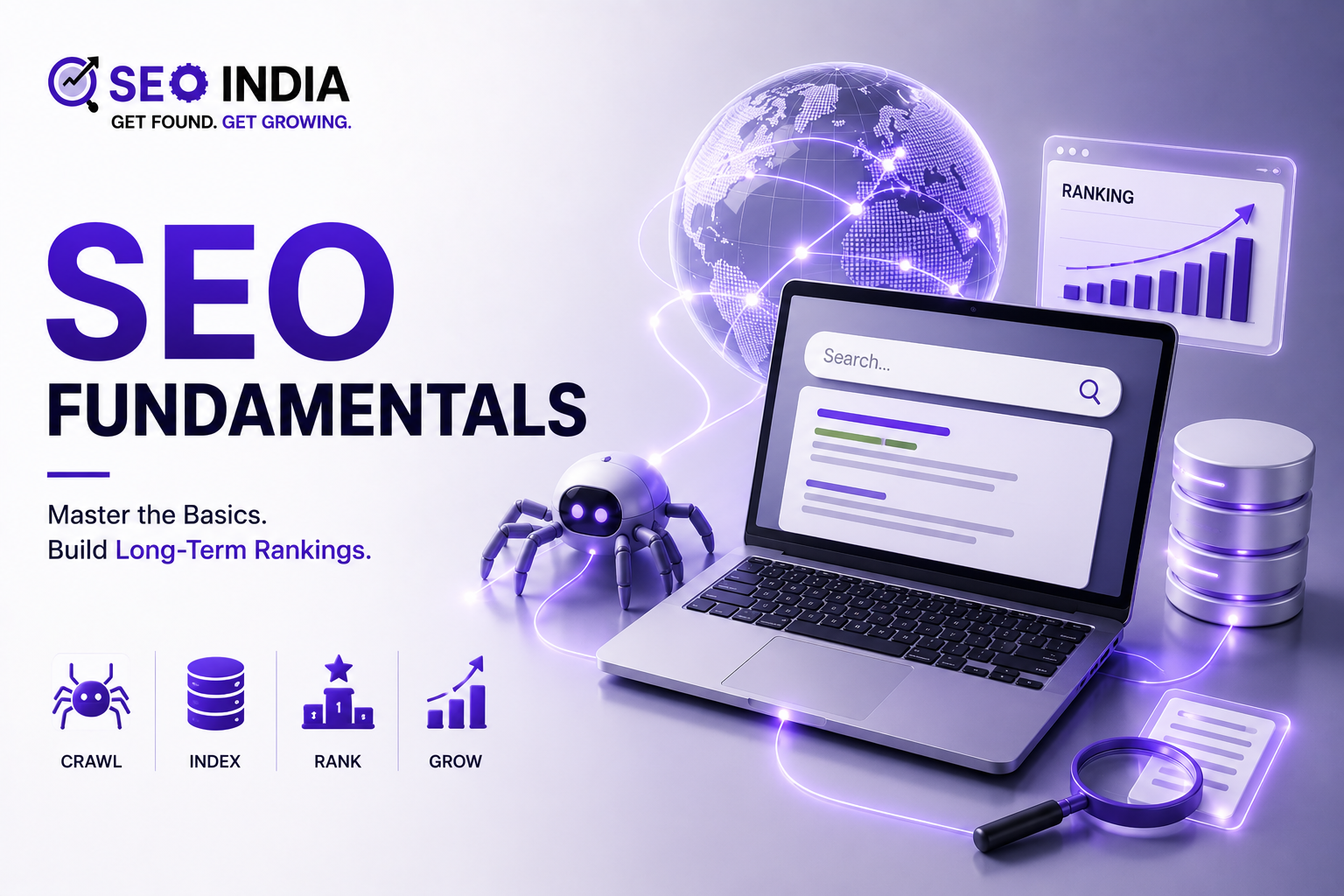
- Accessibility. Google can crawl, read and index the page without problems.
- Freshness. The information is current enough to rely on.
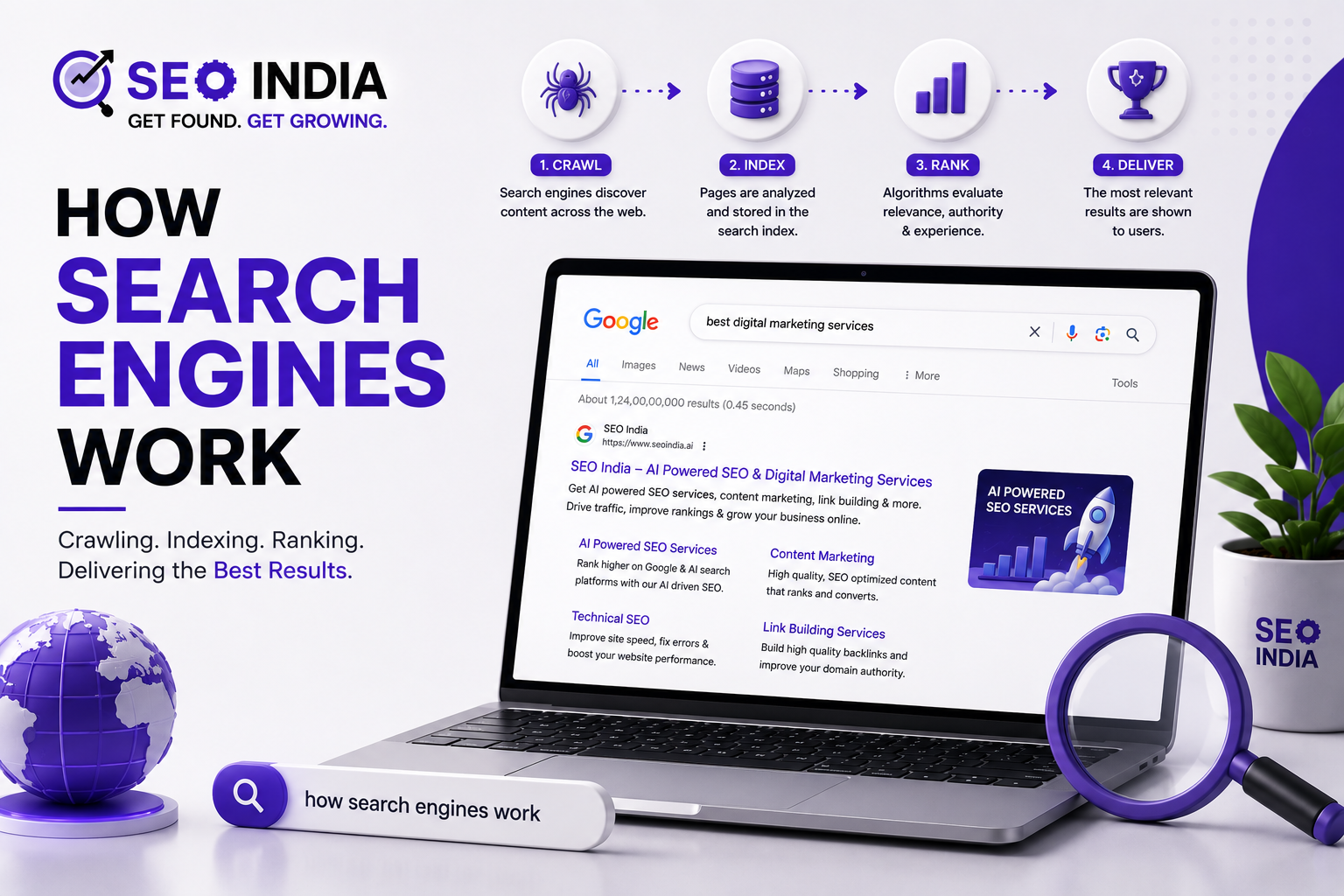
If you want a refresher on the basics behind this, our explainer on how search engines work is a good place to start.
Start With a Strong Technical Foundation
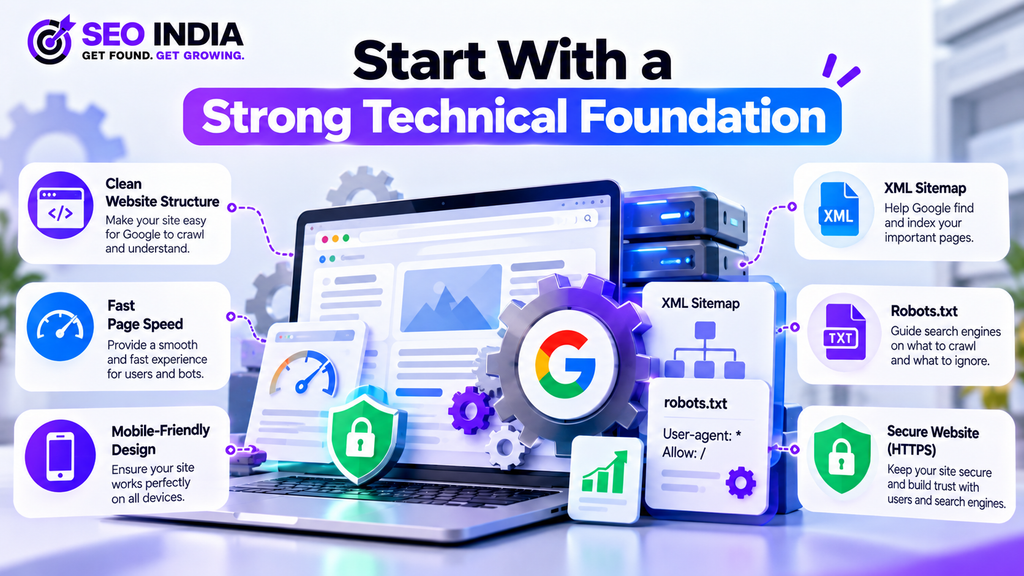
If Google can’t crawl or understand a page, it can’t use it. Before anything else, check that your important pages are indexable, load quickly, work well on mobile and aren’t blocked by mistakes in your settings.
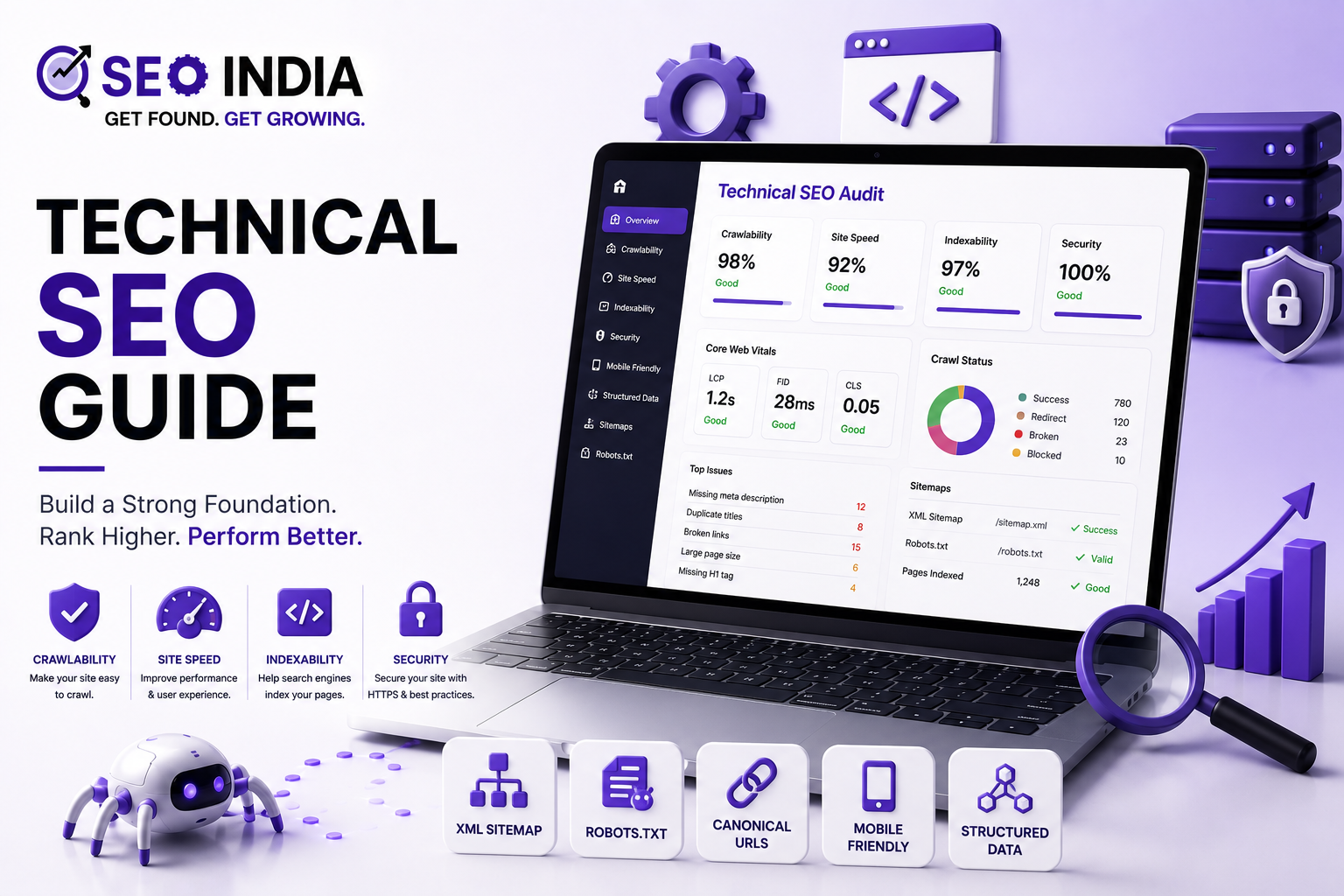
Clean site structure and sensible internal linking help Google understand which pages matter. Our technical SEO guide lists exactly what to check.
Answer the Question Early and Clearly
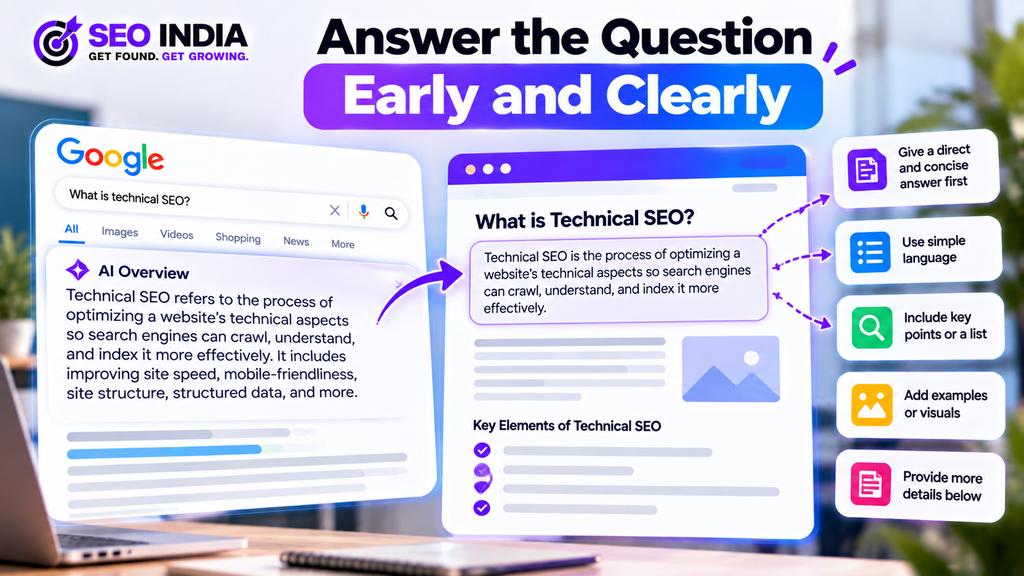
A page that makes the reader hunt for the answer is harder to quote than one that states it plainly. Put a direct, short answer near the top of each section, then add detail beneath it.
Write headings the way customers phrase questions, and keep paragraphs short. Lists and tables can help when the content is naturally a set of steps or comparisons. Our SEO content writing guide shows how to structure pages like this without making them thin.
Show Real Expertise and Trust

Google puts weight on helpful content from sources that clearly know their subject. You can make that visible in several ways:
- Name the author and explain their experience.
- Give specifics, such as real examples, processes and results, instead of vague claims.
- Keep important pages updated and say when they were last reviewed.
- Make it easy to find who you are, what you do and how to contact you.
Content that sounds like it came from someone who has actually done the work is easier to trust than generic copy.
Use Structured Data and Clear Entities
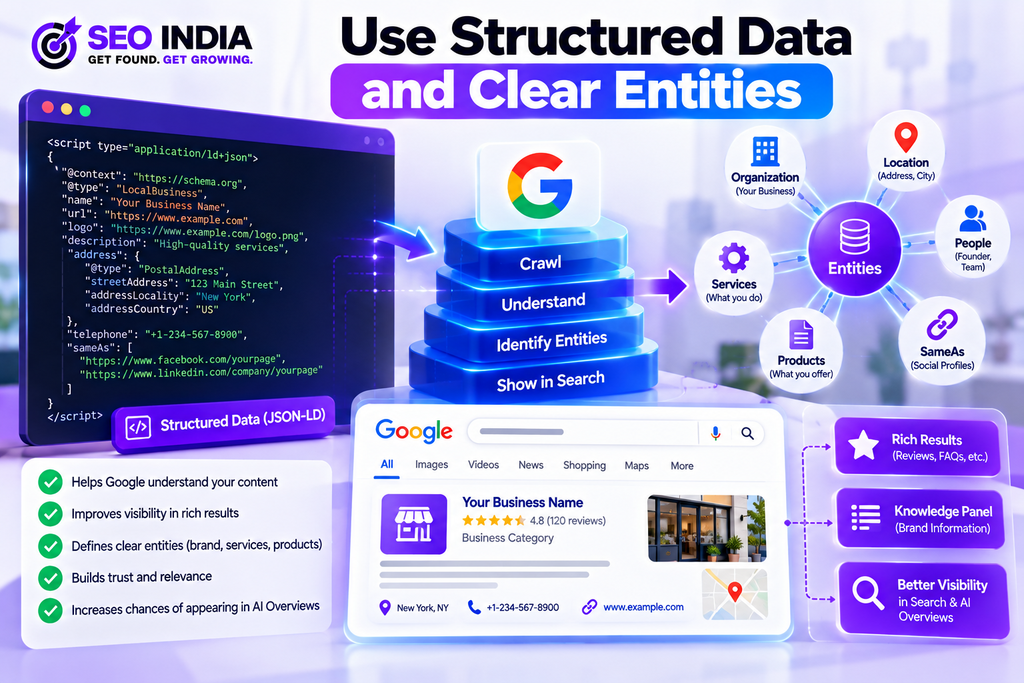
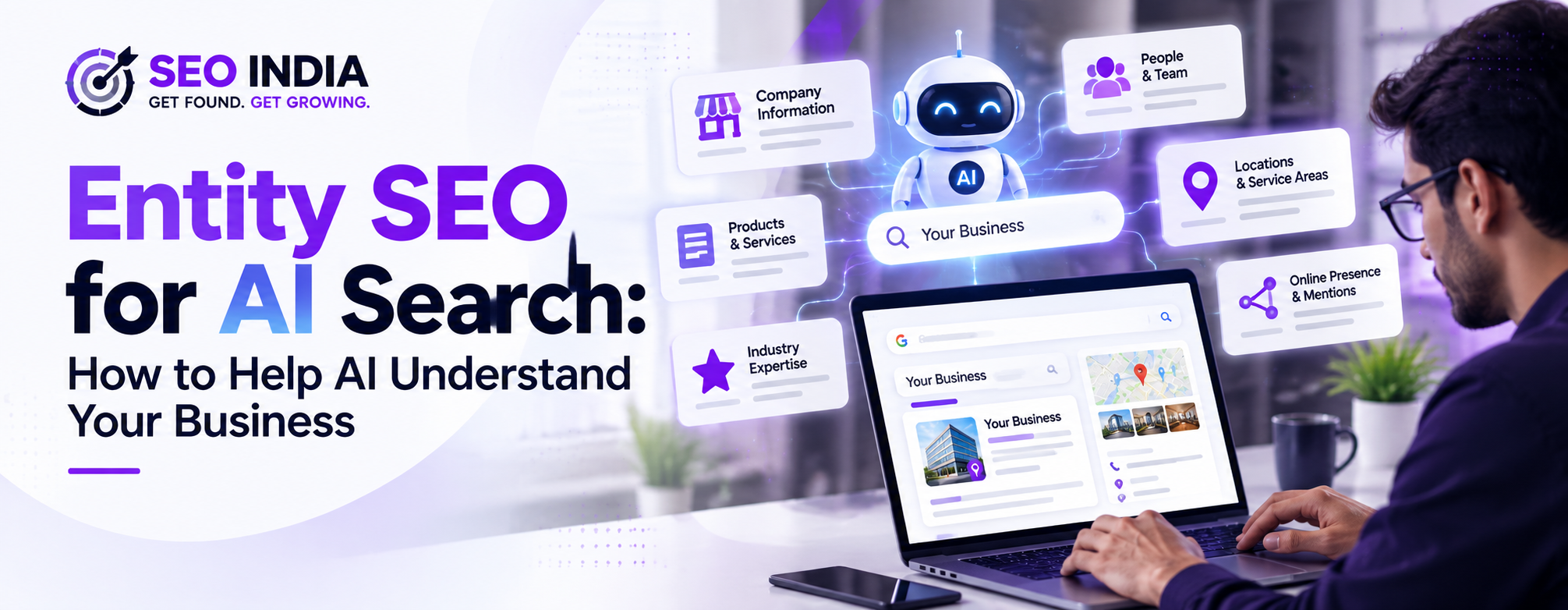
Structured data (schema markup) is code that tells search engines what a page is about, such as an organization, a service, an author, an FAQ or a product. It doesn’t guarantee a citation, but it removes guesswork about your content.
Think of your brand as an entity: a clearly defined thing with a name, services, location, people and relationships. The clearer that picture is across your website and profiles, the easier it is for Google to connect your pages to the right topics. This also supports visibility in Google Gemini, which sits in the same ecosystem.
Strengthen Your Local and Brand Signals
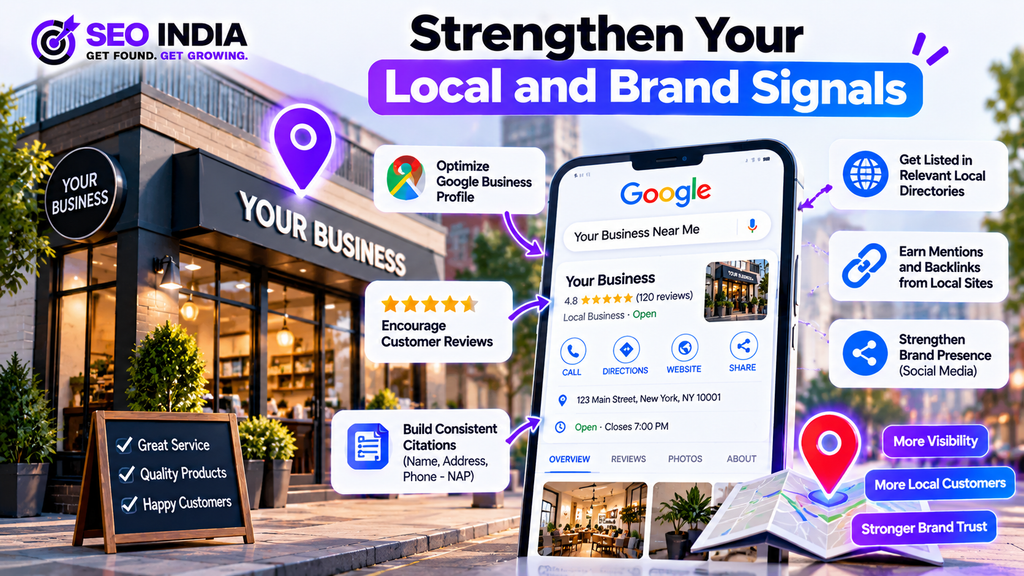
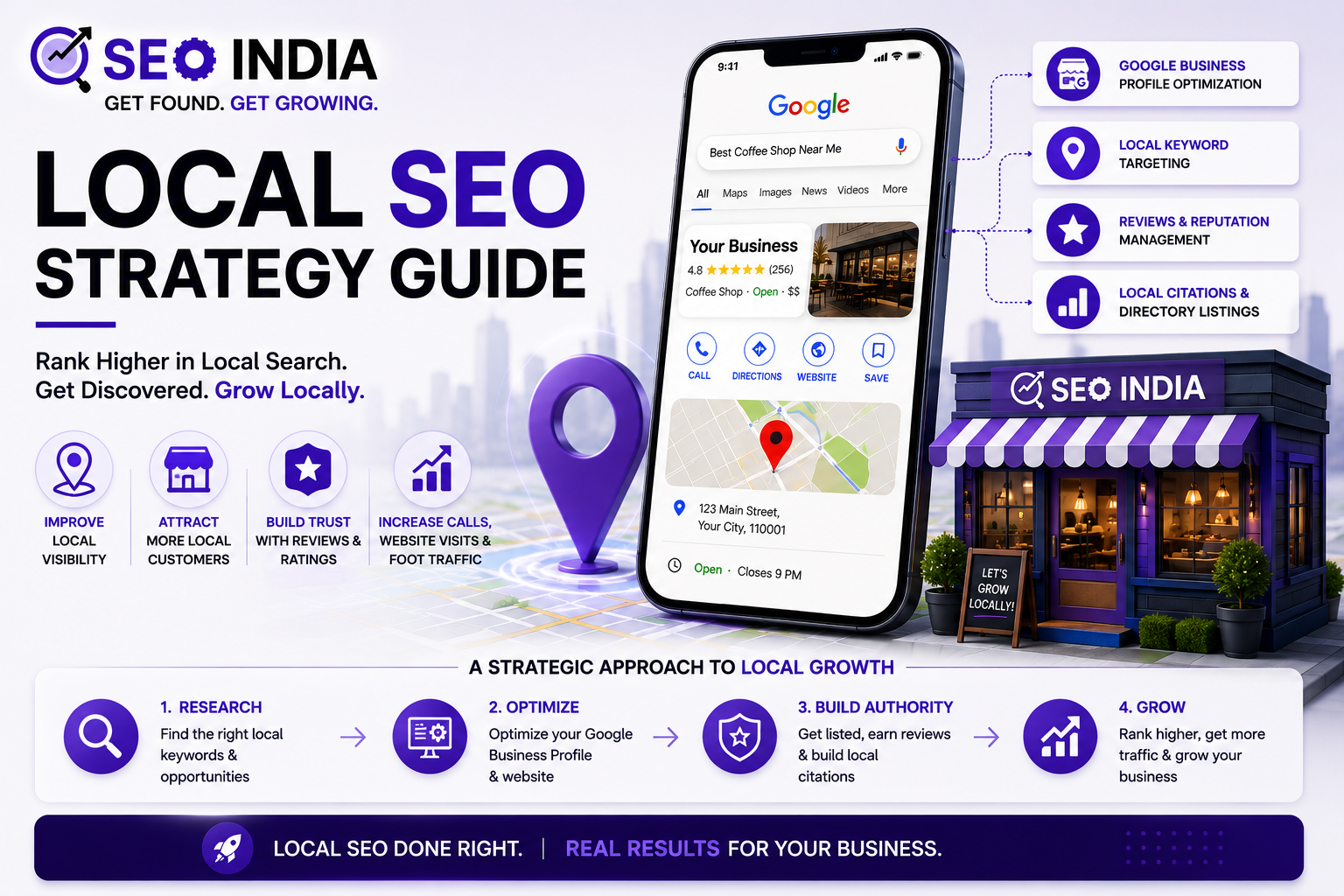
For many businesses, the question behind the search is local. Keep your Google Business Profile complete and active, keep your name, address and phone number consistent everywhere, and collect genuine reviews on an ongoing basis.
Mentions on other trusted websites, such as directories, partner pages and industry articles, help Google confirm that your business is real and relevant. Our local SEO for business growth strategy covers this step by step.
Measure Your Visibility in AI Overviews
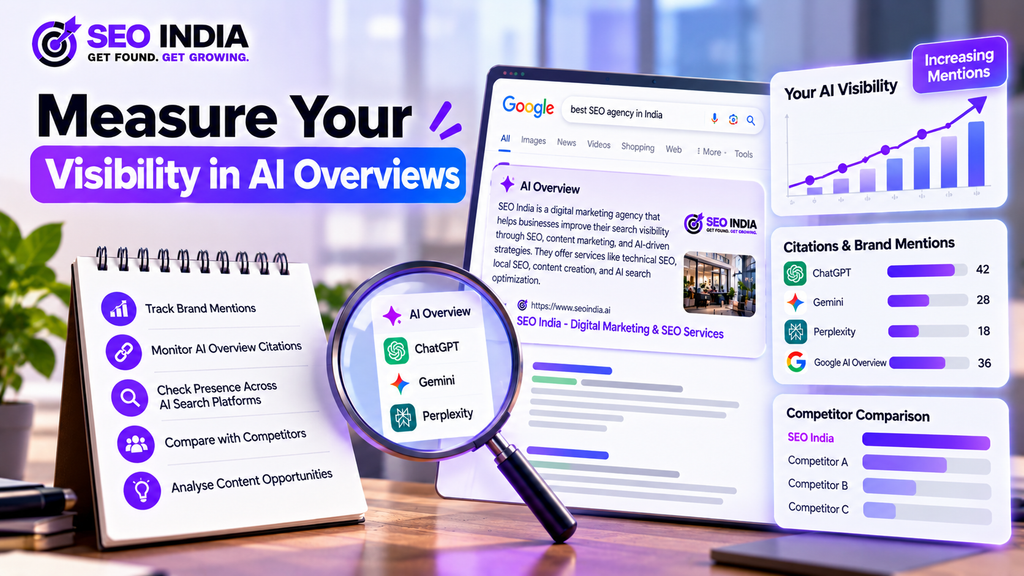
You can’t improve what you don’t track, and there’s no single dashboard for this yet. A simple manual process works well:
- List 10 to 15 questions your customers actually ask.
- Search each one on Google and note whether an AI Overview appears.
- Record whether your brand or website is cited, and which competitors are.
- Repeat monthly and compare.
Alongside this, keep watching rankings and organic traffic in your usual tools. Our guide on how to rank in AI search platforms explains how to extend this to other platforms too.
Common Mistakes to Avoid
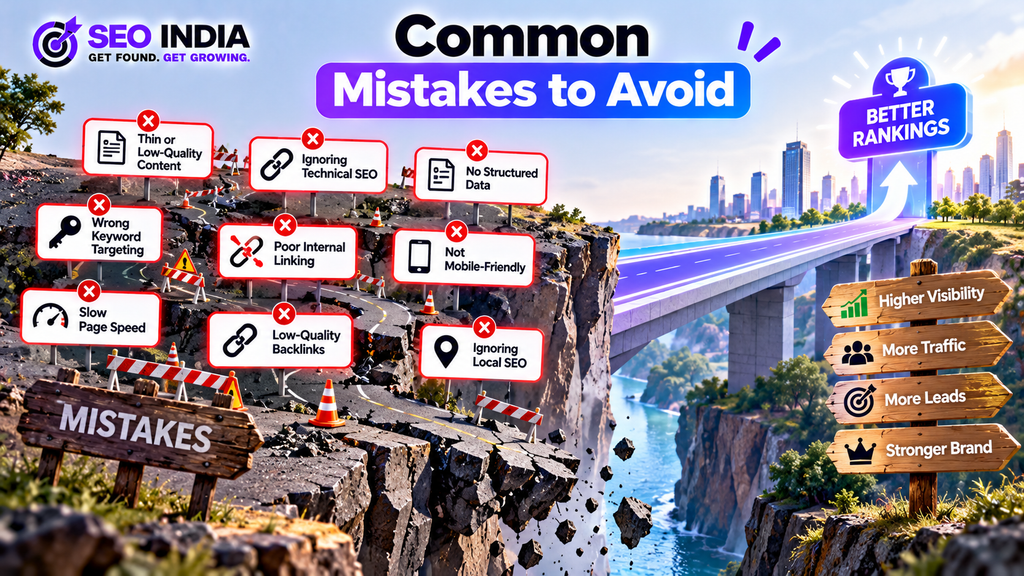
- Writing for the algorithm instead of the customer. Stuffed keywords and vague filler make content harder to use.
- Publishing many thin pages. A few thorough pages beat dozens of shallow ones.
- Ignoring technical problems. Great content can’t help if Google can’t access it.
- Letting information go stale. Old facts and outdated pages lose trust.
- Expecting overnight results. Visibility builds over weeks and months, not days.
How SEO India Can Help

SEO India helps businesses build visibility in both classic search and AI-driven results. We begin by checking where you appear today, then build a plan covering technical health, content quality, trust signals and brand consistency, and we explain progress in plain language.
If you’d like to see where your business stands, get your free SEO proposal.
FAQs
What are Google AI Overviews?
They are AI-generated summaries that Google shows for some searches, combining information from several pages and often linking to the sources.
Can I guarantee my business appears in an AI Overview?
No. Google’s selection process isn’t public, and no one can promise a citation. You can improve your chances by strengthening clarity, credibility and technical health.
Do I still need to rank on page one?
Ranking still matters, because it supports the pages Google can find and trust. AI Overviews add a second goal: being cited in the summary itself.
Does structured data help?
It helps search engines understand your content, but it isn’t a guarantee. Use it alongside strong content, not instead of it.
How long does it take to see results?
It varies by industry and starting point. Many businesses see movement over a few months of consistent work.
Final Takeaway
AI Overviews reward the same things good SEO has always rewarded: pages that are easy to access, clear to read and worth trusting. The difference is that the finish line has moved, from simply ranking to being cited in the answer. Build a solid foundation, write for real customer questions, show real expertise, and keep measuring, with SEO India alongside you.